Make irresistibly soft Valentine’s Day hearts with velvet or chenille yarn. Get simple fixes for tension, stitch visibility, shedding, and a reliable plush h...
Bouclé and Eyelash Yarn When You Can’t See the Stitches

Published
The first time I tried eyelash yarn, I was feeling confident. I had my hook, a simple scarf pattern, and a brand-new skein that looked like it belonged on a glamorous 2000s runway. Ten minutes in, I was squinting so hard my forehead hurt, I could not find the tops of my stitches, and I started wondering if I had accidentally invented a new fiber art called “guessing.”
If that sounds familiar, please know this is not a skill issue. Bouclé and eyelash yarns are designed to blur stitch definition. The trick is to switch from “seeing” your work to feeling it, and to set yourself up with patterns and tools that do not punish you for missing a loop.
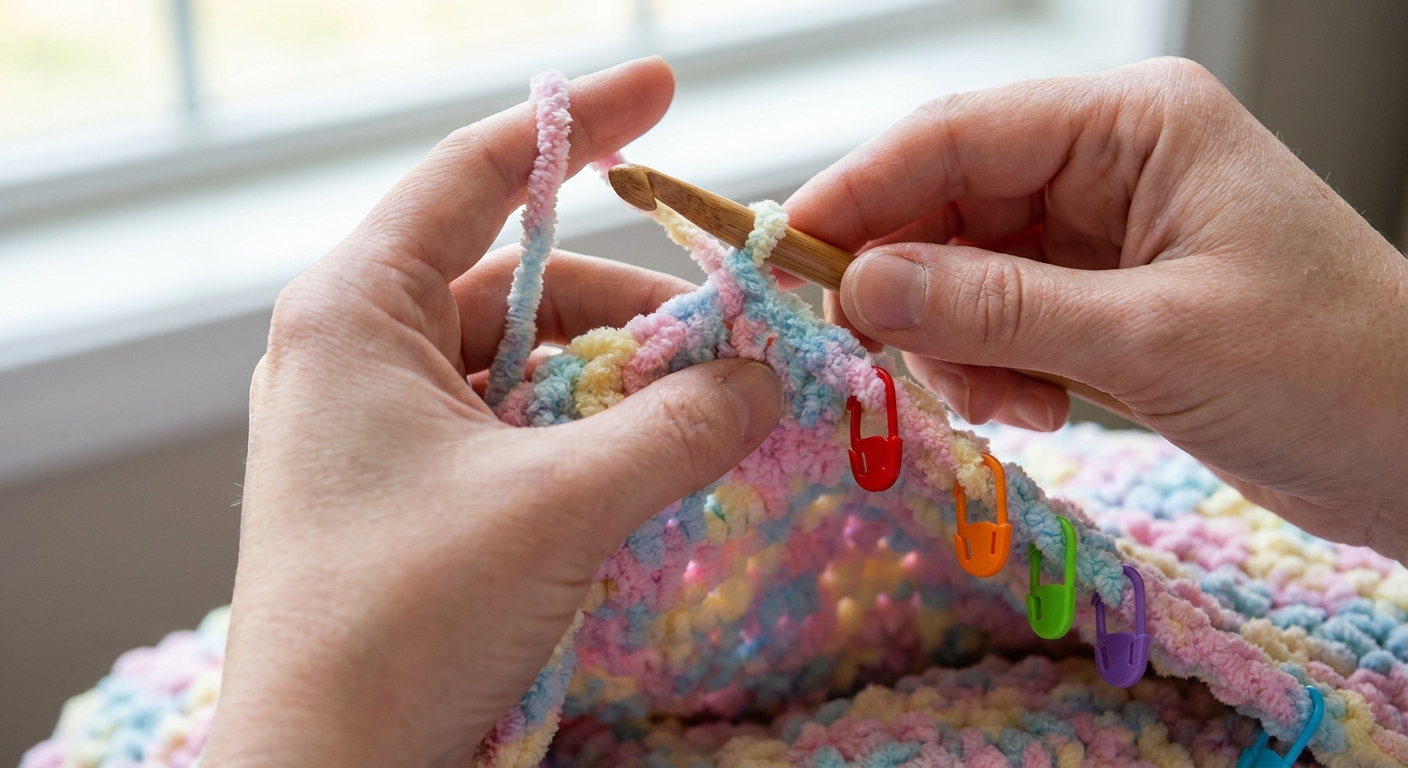
Why stitches vanish in bouclé and eyelash yarn
These yarns hide structure on purpose.
- Bouclé has loops and bumps that camouflage the legs and tops of stitches. Even when your tension is consistent, the surface texture dominates.
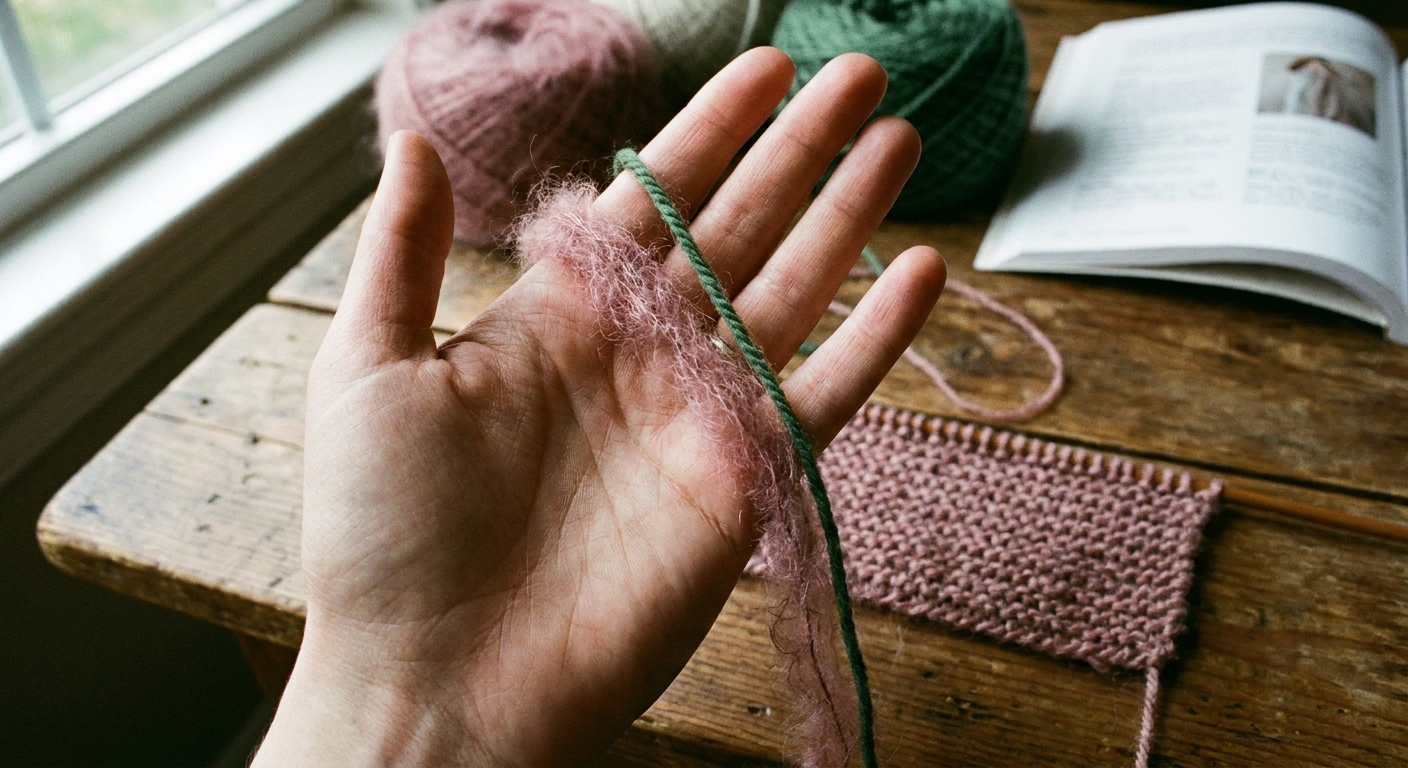
- Eyelash yarn (and similar fringe novelty yarns) wraps the strand in fibers that stick out like lashes, obscuring the stitch anatomy almost completely.
The goal is not perfect stitch visibility. The goal is consistent fabric, and you can absolutely get that with a few tactile habits.
Set yourself up for success before you start
Choose the right project type
When I am working with yarn I cannot read visually, I reach for patterns where minor irregularities disappear into the halo.
- Best bets: scarves, cowls, simple hats, pillows, simple rectangles, plush trims, textured borders, and anything where you can measure length instead of counting constantly.
- Trickier: lace, complex cables, fitted garments with precise shaping, detailed colorwork, and anything with frequent increases and decreases that must land in exact spots.
Pick a larger hook or needle than usual
More space between stitches makes them easier to locate by touch. With novelty yarns, I often go up one to two hook sizes from what the ball band suggests, then adjust after a small swatch.
If you want a refresher on how I swatch and what I look for, this pairs nicely with how to knit and block a gauge swatch. The same “measure the fabric, not your hopes” principle applies to crochet too.
Use good light, but rely on contrast
Bright light helps, but contrast helps more. Try laying your work on a solid background towel in the opposite value (dark towel for pale yarn, light towel for dark yarn). Even if you cannot see individual loops, you can often see edges and rows more clearly.
Tactile stitch finding: how to work when you cannot see
Learn what you are feeling for
In both knitting and crochet, you are hunting for consistent “landmarks.” Here is what I focus on:
- Edges: The side of your fabric is the easiest place to confirm you are not accidentally adding or losing stitches.
- Row ridge or round seam: Even with fluff, you can often feel where a row turns or where a round begins.
- Top of stitch: In crochet, you are feeling for the slight “bump” where the next stitch should be placed. In knitting, you are feeling for the front and back legs of the loop on the needle.
The pinch-and-rock method (crochet)
When the stitch top is buried, try this:
- Pinch the fabric where the next stitch should go, using your thumb and index finger to isolate a small area.
- Rock the hook tip gently back and forth until you feel it slide under the correct strand(s).
- Confirm by feel: the hook should pass through with steady resistance, not snag wildly.
The “count by touch” habit (knit and crochet)
Instead of staring, run a fingertip along the edge and count bumps or posts in a calm rhythm. I do this more slowly than normal yarn. Slow is fast here.
Stitch markers are your best friend (and you need more than you think)
If you take only one thing from this article, let it be this: place markers before you need them.
Strategic marker placement for crochet
- Every round: Use a locking marker in the first stitch of each round. Move it up as you go.
- Every 5 to 10 stitches: When working long rows, place markers at intervals so you can confirm stitch counts in chunks.
- At increase or decrease points: Mark the stitch where the shaping happens, especially in amigurumi or hats.
Strategic marker placement for knitting
- Beginning of round: Always.
- Pattern repeats: Put a marker between repeats so you can “feel-check” that you stayed on track.
- Raglan or shaping lines: Mark each line so you can confirm decreases or increases without hunting.
If you tend to forget where you were mid-project, I also love using a simple project note system. My approach is in make a project card before starting crochet, and it works beautifully for knitting too.
Pairing methods that make bouclé and eyelash yarn easier
If you are open to combining yarns, you can make novelty yarns dramatically more manageable.
Hold novelty yarn with a smooth “buddy yarn”
This is my most reliable trick. Hold your bouclé or eyelash together with a smooth strand (acrylic, wool, or cotton in a similar weight). The smooth strand creates a stitch “spine” you can feel and sometimes see.
- Color tip: Match colors for a blended look, or choose a slightly darker smooth strand for subtle depth.
- Tension tip: Treat the two strands as one. If they separate while you work, lightly twist them together every so often.
Use novelty yarn as an accent, not the structure
If you love the fuzzy look but hate the fuzzy process, consider:
- One eyelash strand carried along a solid base yarn for a “fur trim” vibe.
- Bouclé stripes separated by plain yarn stripes so you get texture without suffering for the entire project.
- Surface crochet edging with eyelash yarn on top of a finished fabric where stitch placement is clearer.
Stitch choices that behave well in fluffy yarn
Novelty yarn rewards simple structures. You want stitches that are forgiving and do not require you to insert into specific tiny loops.
Crochet stitch picks
- Single crochet: sturdy, but can be slow to “find” unless you use markers.
- Half double crochet: a sweet spot for speed and flexibility.
- Double crochet: more open fabric, often easier to insert into because the spaces are larger.
- Granny-style spaces: working into chain spaces is much easier than hunting stitch tops.
Knitting stitch picks
- Garter stitch: simple, squishy, and forgiving. Great for scarves.
- Stockinette: works, but can curl. Pair with a border or use a needle size that creates a stable fabric.
- Simple ribbing: doable, but it can be hard to read. Add markers and count by touch.
If you enjoy letting yarn do the visual work, you might also like projects built around yarn effects, such as a one skein infinity scarf for variegated yarn.
How to count rows and rounds without seeing them
Measure instead of counting whenever possible
For scarves, cowls, and blankets, I often work to a target measurement rather than a strict row count. Novelty yarn hides small differences, and your sanity matters.
Use “row markers”
Clip a locking stitch marker into the fabric every 2 to 5 rows (or every round) on one edge. Later, you can count markers instead of fuzzy ridges. This is especially helpful if you put the project down for a week and come back wondering what universe you were in.
Fixing mistakes in bouclé and eyelash yarn (without tears)
Let me be honest: frogging novelty yarn can feel like wrestling a tiny, determined animal. The fibers want to cling, and you can accidentally felt or fray the strand if you yank.
My gentle unpick routine
- Stop pulling straight back. Instead, loosen one stitch at a time.
- Use a blunt tip tool (a smaller hook, a tapestry needle, or even the rounded end of a stitch marker) to tease loops apart.
- Work in short sections and smooth the yarn between your fingers as you go to keep it from knotting.
- When in doubt, tink forward: sometimes it is easier to carefully correct on the next row than to rip back several rows you cannot see.
If the yarn is splitting or snagging as you try to redo stitches, the mechanics are similar to smoother fibers, just harder to spot. My knitting-focused troubleshooting still applies: stop yarn splitting while knitting.
Mini practice plan (15 minutes that saves hours)
If you are new to these yarns, try this quick practice before committing to a full project:
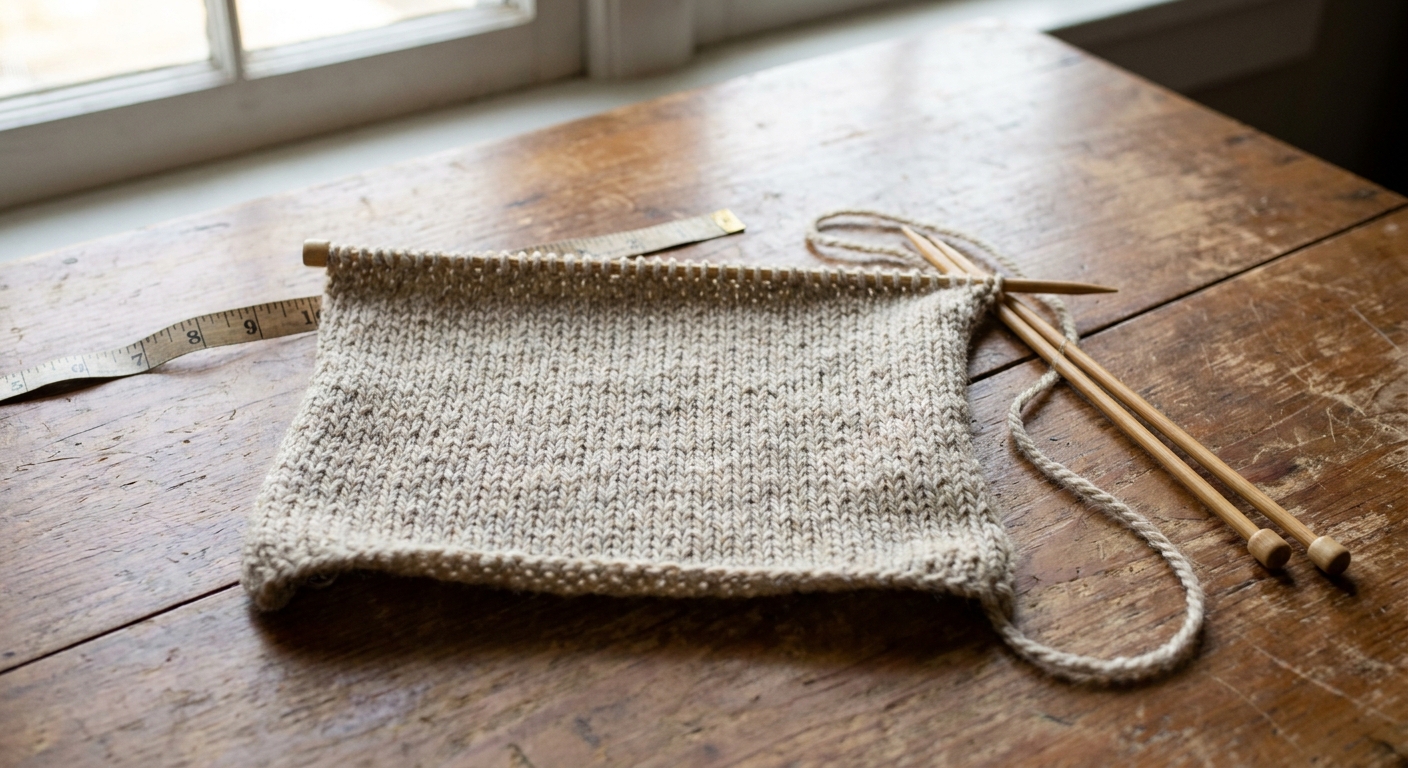
- Make a small swatch (about the size of your palm) in a simple stitch.
- Place a marker every 5 stitches and every 2 rows.
- Practice inserting your hook or needle without looking for 10 stitches. Then check your work.
- Practice ripping back 5 stitches slowly, so you know how the yarn behaves.
This is the kind of low-pressure practice that turns novelty yarn from frustrating to fun.
Quick FAQ
Is bouclé or eyelash yarn better for beginners?
Between the two, bouclé is often slightly easier because the core strand is usually a bit more stable. Eyelash can be wonderfully dramatic, but it hides stitch structure more aggressively.
Should I use dark or light novelty yarn?
Light colors can be easier to see in bright light, but the real deciding factor is contrast against your lap, table, and marker color. Choose markers that stand out boldly from the yarn.
Can I crochet amigurumi with eyelash yarn?
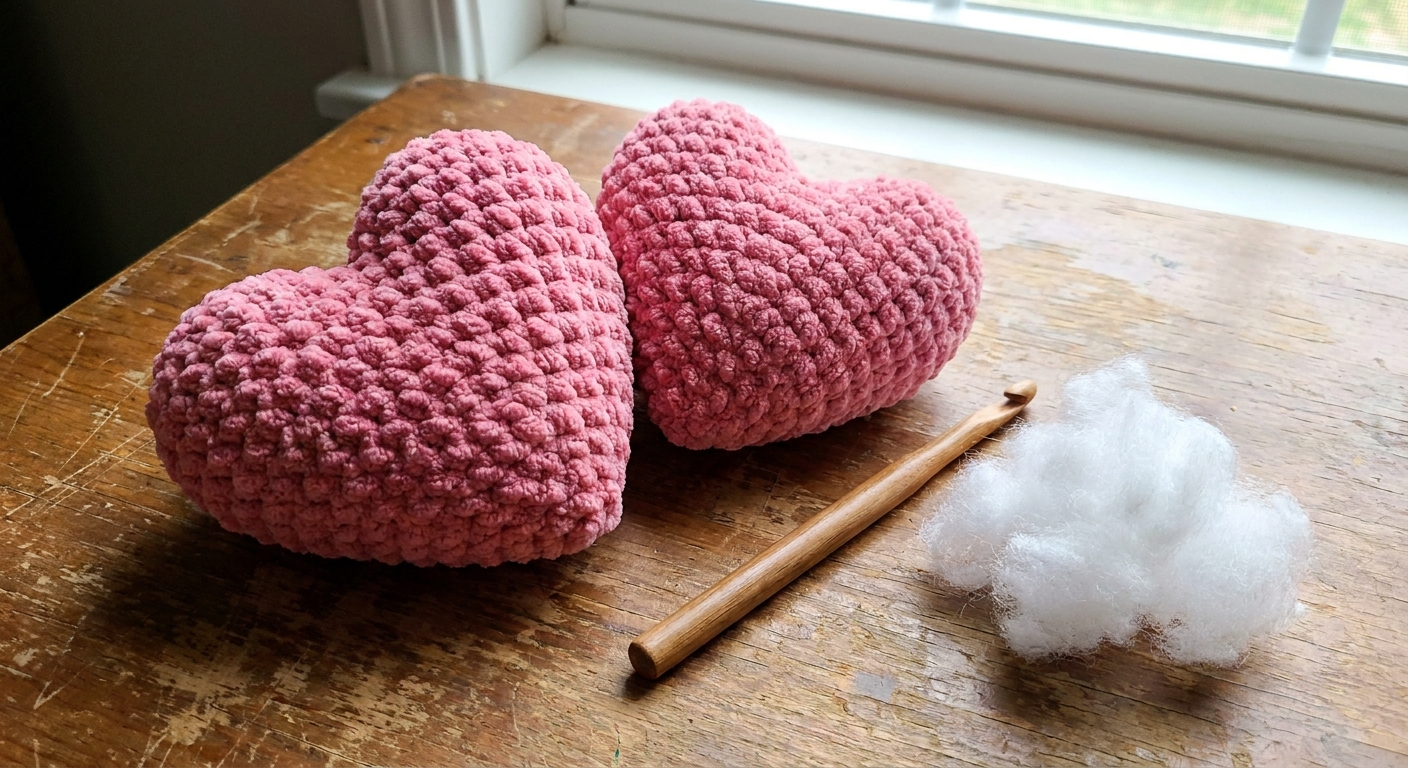
You can, but I recommend making the shape in a smooth yarn first, then adding eyelash as a carried strand or as a surface layer. If you do it fully in eyelash, use lots of markers and expect more “count by feel.” For resizing tips when you change materials, see resize amigurumi by changing yarn weight.
A final bit of reassurance
When you cannot see your stitches, it is easy to feel like you are crocheting or knitting “wrong.” You are not. You are simply working in a different mode, one that leans on touch, rhythm, and smart checkpoints.
Once you get the hang of it, bouclé and eyelash yarns become wonderfully relaxing. The fabric looks fancy, the process becomes surprisingly meditative, and nobody but you will ever know where you had to feel around for that one stubborn stitch.