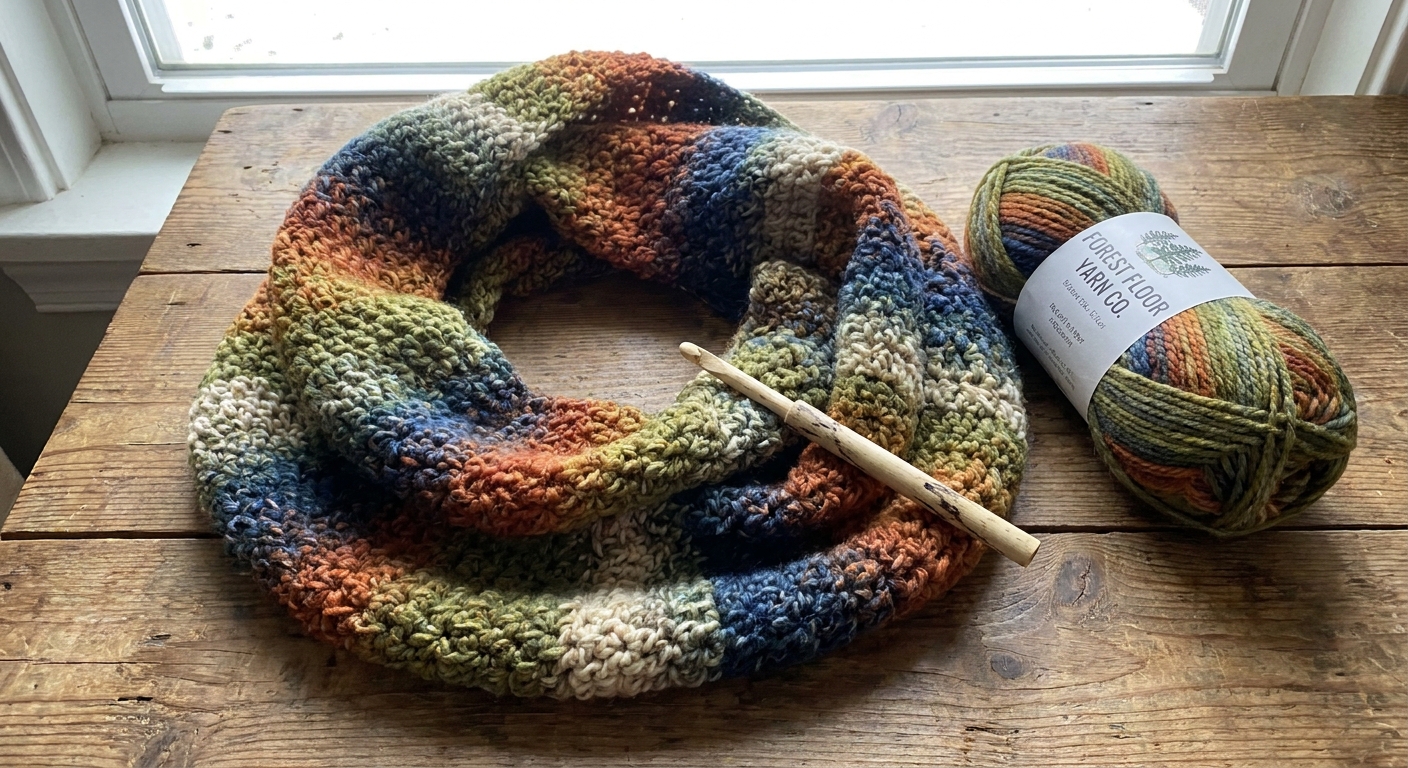
One-Skein Infinity Scarf for Variegated Yarn

There is a special kind of crochet joy that happens when you pull out a single skein of variegated yarn, make a loose slipknot, and let the colors do the talking. When I want a project that feels calming and un-fussy, this is the cowl I reach for: simple stitches, a steady rhythm, and a fabric that shows off those hand-dyed shifts without fighting them.
This one-skein infinity scarf is built to be fast and meditative, but still polished enough to gift. It also plays nicely with color pooling if your yarn wants to “stack” in repeats.
Why this stitch works
Variegated and hand-dyed yarns already bring contrast and movement, so the trick is choosing stitches that add texture without turning the fabric into visual noise.
- Half double crochet (hdc) makes a smooth, slightly squishy fabric that reads as “soft stripes” even when the dye changes quickly.
- Working in the back loop only adds a gentle rib that gives depth, but still lets color take center stage.
- A long rectangle joined into a loop means the color story stays continuous instead of being broken by frequent ends or motif changes.
Pattern overview
- Skill level: Beginner comfortable (you should know chain, slip stitch, and hdc)
- Finished size: About 9 to 10 in wide. Length before seaming: 55 to 65 in. Final circumference: the same as your length before seaming
- Yardage: 1 skein, typically 350 to 450 yd of worsted weight (yardage will vary with hook size and tension)
- Construction: Crochet a rectangle lengthwise, then seam short ends to form an infinity loop
If you love setting yourself up before you start (it saves me from “mystery hook” moments later), you might like my little habit of making a project card: Make a project card before starting crochet.
Materials
- Yarn: 1 skein variegated or hand-dyed yarn, worsted weight (Category 4), about 350 to 450 yd (or use what you have and crochet until you reach your favorite length)
- Hook: 6.0 mm (J-10) or 6.5 mm (K-10.5) for a drapier fabric
- Notions: Tapestry needle, scissors, 2 stitch markers (optional)
Yarn notes
- High-contrast variegation: This stitch pattern helps it read as intentional, not busy.
- Long color runs: You will get elegant striping and a calm overall look.
- Speckles: Gorgeous here, especially if you keep the fabric slightly open with a larger hook.
Easy yarn swaps
- DK weight: Lighter and a bit narrower at the same starting chain. You will usually need more length (or embrace a snugger cowl).
- Bulky yarn: Plush and fast, but you will run through yardage quickly. Consider starting narrower and aiming for a shorter circumference.
Gauge and sizing
Gauge is flexible for scarves, but it affects yardage. If you crochet tightly, go up a hook size so you do not run out of yarn before you hit the length you want.
Helpful reference (approximate): With worsted weight and a 6.0 mm hook, many crocheters land around 12 to 14 hdc and 9 to 11 rows = 4 in in hdc back loop only. If yours is much tighter, your scarf will eat yarn faster.
Quick gauge check: Make a 4 x 4 in swatch in back loop hdc. If it feels stiff, size up your hook. If it feels limp and loopy, size down.
Choose your dimensions
- Width: 8 to 12 in is a sweet spot for a cowl that sits nicely without bulk.
- Length before seaming: 55 to 65 in gives a classic double-wrap infinity on most adults.
- Single wrap option: 40 to 45 in for a snug “neck hug” cowl.
Abbreviations
- ch = chain
- hdc = half double crochet
- sl st = slip stitch
- blo = back loop only (work into the back loop of the stitch)
- RS/WS = right side/wrong side
Notes: Ch-2 at the start of rows does not count as a stitch in this pattern. To keep your edges neat, place your first hdc in the very first stitch of the row (right next to the turning chain), and your last hdc in the last stitch.
Optional tidy edge tip: On Row 1, you can work into the back bumps of the foundation chain for a cleaner bottom edge. Totally optional, and I only bother if I am feeling extra fussy.
One-skein infinity scarf
Foundation
Ch 34 (for about 9 to 10 in width).
Row 1: Hdc in 3rd ch from hook and in each ch across. (32 hdc)
Row 2: Ch 2, turn. Hdc blo in each st across. (32 hdc)
Body
Repeat Row 2 until your rectangle measures about 55 to 65 in long (length before seaming), or until you have used almost all your yarn.
My “do not run out of yarn” checkpoint
Yardage varies a lot with tension, so I treat this pattern like friendly yarn chicken. When you think you are close, stop and reserve enough yarn for:
- one more full row (just in case)
- a tidy seam
- weaving in ends without stress
Finishing row
Work one final Row 2, then do not fasten off yet if you plan to slip stitch the seam. If you prefer a whip stitch seam, fasten off leaving a 20 to 30 in tail.
Join into a loop
Before you seam: Lay the rectangle flat and decide which side you want showing. I usually use the smoother edge as the RS, but honestly, this fabric looks good either way.
Option A: Slip stitch seam
Fold the rectangle so the short ends meet. With RS sides facing the way you want, align stitches end-to-end.
- For a flatter seam, work slip stitches through the back loop of the front layer and the front loop of the back layer (this tucks the ridge inward).
- For a simple sturdy seam, work slip stitches through both loops of both layers.
Sl st across to join. Fasten off and weave in ends.
Option B: Whip stitch seam
Thread your tapestry needle. With short ends aligned, whip stitch through matching stitches across. Pull snug but not tight. Weave in ends.
Twist or no twist? I prefer no twist for this pattern because it keeps the gentle ribbing consistent. If you love a mobius look, add one twist before seaming, but know it will change how the color pooling reads.
Easy changes
Make it wider
Add chains in multiples of 2 to the starting chain. Wider scarves eat yarn quickly, so consider a slightly shorter length if you want to keep it one skein.
Make it airier
Use a larger hook size and keep your tension relaxed. Variegated yarn often looks more luminous when the fabric has a little drape.
Make the ribbing pop
Instead of hdc blo, try slip stitch blo for a strong knit-like look. It is slower and usually makes a denser fabric that works up shorter and can use more yarn, so it may not stay one skein unless your yardage is generous.
Want intentional color pooling?
Pooling is a fun rabbit hole. The simplest way to encourage it is to keep your stitch consistent and avoid changing tension mid-project. If you want a deeper dive into size changes that affect stitch count and pooling, see: Resize amigurumi by changing yarn weight. It is written for toys, but the same logic about yarn thickness and gauge applies surprisingly well to wearables.
Blocking and care
Most cowls look better with a gentle steam or wet block, especially if the yarn has wool content. I block mine by laying it flat, smoothing the edges, and letting the fabric relax into its final drape.
- Superwash wool: Often grows a touch after washing, which can be lovely for cowls.
- Acrylic: Steam lightly and carefully, and do not press the iron down.
- Hand-dyed yarn: If you are worried about bleeding, test for colorfastness first. I do a small soak in cool water (often with a little wool wash) and see what happens before I commit.
Troubleshooting
My scarf is curling
A little curl is normal early on. Keep going for a few inches. If it still curls a lot, go up a hook size or add a simple single crochet border at the end (one round around the rectangle before seaming).
I am going to run out of yarn
Stop where you are, work your finishing row, and seam it. A slightly shorter infinity scarf still looks intentional. If you want to be extra neat, stop after completing a full row so the edges match.
The colors look messy
Try one of these quick fixes:
- Go up a hook size to open the fabric.
- Switch to regular hdc (both loops) to smooth the texture.
- If the yarn changes color extremely fast, reduce texture and do plain hdc without blo ribbing.
More cozy patterns
If you are in a “one-skein and done” mood, stash projects are my favorite kind of low-pressure making. Here are a few places to browse next: