
Stop Yarn Splitting While Knitting

Yarn splitting is one of those tiny annoyances that can ruin your flow fast. I still remember knitting my first scarf in a softly spun acrylic and wondering why my stitches looked fuzzy and uneven, like the needles were picking fights with the yarn. The good news is that splitting is usually fixable with two levers you control every minute you knit: your needle choice and your tension.
This guide walks through what is actually happening when yarn splits, then gives you practical needle and tension fixes you can try immediately.
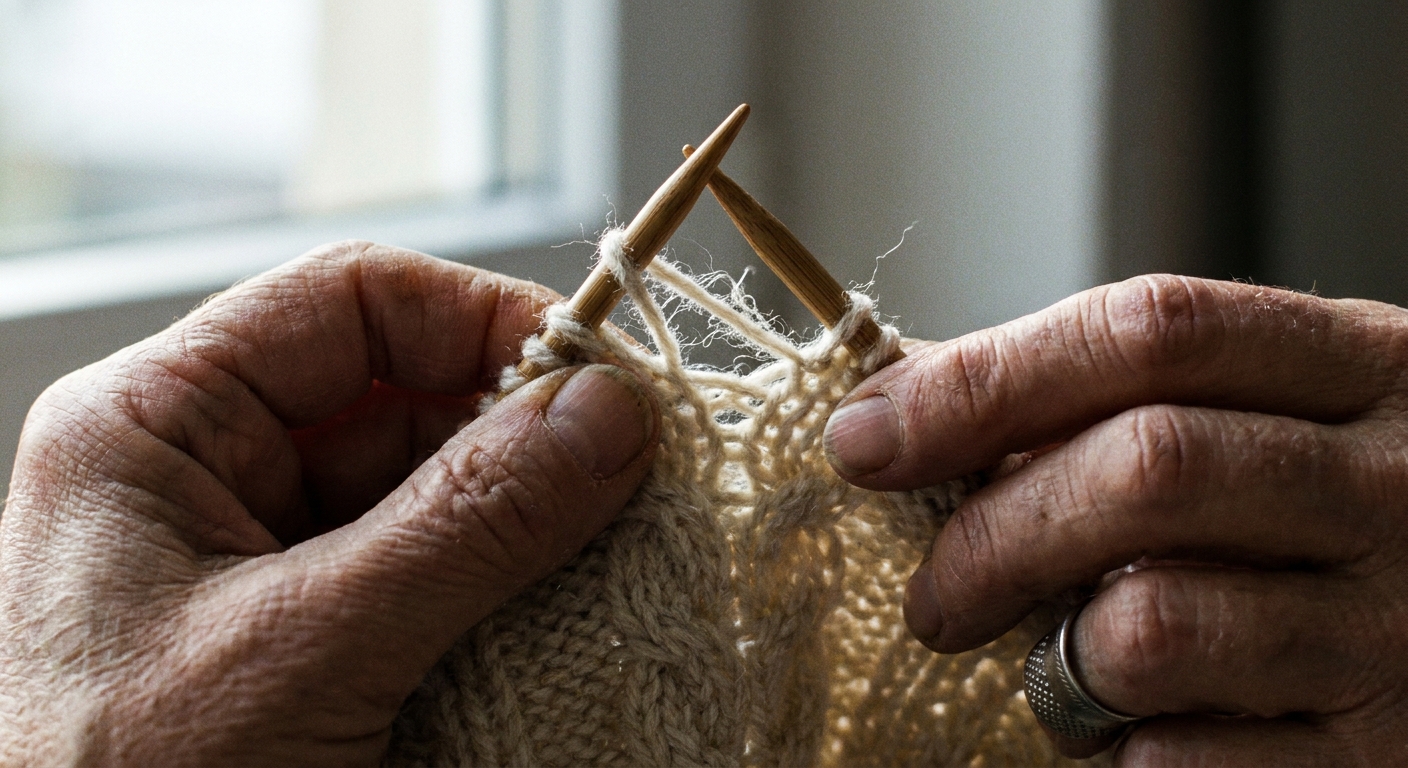
Why yarn splits in the first place
Most knitting yarns are made from multiple smaller strands called plies twisted together. When the needle tip slides into the stitch, it should scoop the whole loop as one unit. Splitting happens when the needle tip slides between those plies and grabs only part of the loop.
A few things make that more likely:
- Sharp needle tips that act like tiny spears
- Loosely twisted or softly spun yarns (single ply and chainette yarns are common culprits)
- Sticky or draggy needles that encourage you to push harder with the tip
- Very tight stitches (small opening, more force, more splitting)
- Knitting style that “stabs” into the stitch instead of sliding through it
Once you know that splitting is basically a needle tip entering the wrong lane, the fixes become very logical.
Needle choices that reduce splitting
If you want the fastest improvement, swap needles before you change anything else. When splitting is constant, it is often a tool mismatch, not a skill issue.
1) Choose a blunter tip for split-prone yarn
Super pointy tips are wonderful for lace and complex decreases, but they are also experts at separating plies. If your yarn is fuzzy, loosely twisted, or just generally “soft,” try a needle with a more rounded point.
- Try when: you split the yarn multiple times per row, especially on knit stitches
- Look for: “standard,” “classic,” or “rounded” tips (not “lace” tips)
You do not need a totally blunt needle. You want rounded enough that it glides into the stitch opening without spearing the yarn itself.
2) Match needle material to the yarn’s grip
Needle material changes how much friction you feel, and friction changes how hard you push. The more you push, the more you risk splitting.
- Metal needles: very smooth, fast. Great for sticky fibers and for knitters who tend to knit tight.
- Bamboo or wood needles: more grip. Helpful if stitches slide off too easily, but can create drag with some yarns and make you force the tip through.
- Plastic or acrylic needles: can be somewhere in the middle, but quality varies. Watch for seams or rough spots that catch fibers.
If you are fighting your stitches on grippy needles, try metal. If everything is flying off your needles and you tighten up to compensate, try wood.
3) Check the needle surface for tiny snags
This one is sneaky. Even a small burr near the tip or a rough join on a circular needle can catch a ply and pull it apart.
- Run a scrap of yarn slowly over the needle tip and along the first inch of the shaft.
- If it catches, try a different needle, or very gently buff the spot with a fine nail buffer. If the needle is truly damaged, replacing it saves a lot of frustration.
4) Consider going up one needle size (yes, even if you swatched)
Tight stitches make it harder to enter the stitch cleanly. Going up one needle size gives the stitch opening a bit more room, so your tip is less likely to force itself between plies.
If you are following a pattern with gauge requirements, do a quick mini-swatch before committing. If you crochet as well, you might recognize this idea from how changing tool size affects fabric and ease. The same concept applies.
5) Circular needles can reduce strain that leads to splitting
If splitting gets worse as your hands tire, your technique often turns into more of a “stab.” Circulars (even for flat knitting) can reduce wrist strain because the weight of the project rests in your lap more easily.
For more general knitting set-up and skill refreshers, our Knitting guide is a good place to browse.
Tension fixes that stop yarn splitting
Tension is not only about getting gauge. It changes the geometry of your stitch and the path your needle tip takes through it.
1) Soften your “entry” into the stitch
Instead of stabbing straight into the front of the loop, aim for a gentle slide. Think: “find the opening, then travel through.” If you feel resistance, pause and reset your angle rather than pushing harder.
- Helpful cue: keep the working needle tip slightly down as it enters, so it is less likely to lift and catch a single ply.
2) Loosen the stitch you are about to work (micro-adjustment)
If the stitch on your left needle is tight and tiny, use the right needle tip to nudge it slightly open before you knit it. You are not changing your whole tension, just making space so you can pick up the full loop cleanly.
3) Avoid yanking the working yarn after each stitch
A common habit is to snug every stitch down immediately. That makes the next stitch harder to enter, which leads to more stabbing, which leads to more splitting.
Try this instead:
- Make the stitch.
- Let it sit naturally on the right needle.
- Only apply a gentle tidy-up tug every few stitches if needed.
4) Watch for combination knitting issues (twisted stitches can feel splitty)
If your stitches are unintentionally twisted, the stitch mount can make the needle enter at an awkward angle. That does not literally split the yarn every time, but it can feel like your needle is constantly catching and dragging fibers.
If your fabric looks tighter than expected or the V’s look crossed at the bottom, take a moment to confirm you are entering stitches through the correct leg for your style.
5) Give your hands a reset when splitting spikes
When splitting suddenly gets worse halfway through a session, it is often fatigue. I set my work down, roll my shoulders, and knit the next 10 stitches slowly with exaggerated gentleness. Most of the time the problem disappears because my hands stop forcing the motion.
Yarn-specific tricks (when the yarn is the main culprit)
Some yarns are just more eager to split, especially:
- Single ply yarns
- Loosely spun roving-style yarns
- Very smooth, low-twist cotton
- Novelty textures like velvet and chenille
Try knitting with a slightly firmer yarn feed
This sounds backward, but for very splitty yarn, letting the yarn go completely slack can allow plies to open up. A consistent yarn feed helps keep the strand cohesive as it moves through the stitch.
Choose simpler stitches until you learn the yarn’s personality
Highly textured stitch patterns can involve lots of re-inserting the needle, slipping, or knitting into the back loop, all of which increase opportunities to split. If you are getting to know a tricky yarn, spend a few inches in stockinette or garter first.
Wind yarn into a cake if it is coming off the skein with extra twist
If the yarn is twisting up on itself as you knit, the plies can loosen and separate. Rewinding can calm that down. You do not need fancy equipment. Even hand-winding into a center-pull ball can improve consistency.
Quick troubleshooting checklist
If you want the fastest path to less splitting, try these in order:
- Switch to a more rounded needle tip (same size first).
- Change needle material (metal if you are fighting drag).
- Go up one needle size if stitches are very tight.
- Stop tightening every stitch as you go.
- Slow down for 10 stitches and focus on sliding through the stitch opening.
FAQ
Does yarn splitting mean my yarn is low quality?
Not necessarily. Some beautiful yarns are softly spun on purpose for softness and bloom. They can still be wonderful. They just prefer friendlier needles and a lighter touch.
Why do I split yarn more on knit stitches than purl stitches?
Many knitters enter knit stitches at a sharper angle and with more speed, especially when knitting in the round. Also, the leading leg of the stitch can sit differently depending on how you tension and how your stitches mount. A rounder tip and a deliberate “slide” usually helps.
Can I fix split stitches after the fact?
If you catch it right away, yes. Drop back that stitch (or tink back a few stitches) and re-knit it, making sure you catch all plies. If you do not, the split section can look fuzzy or weak, especially after washing and wear.
Is splitting worse with cotton?
Cotton can be split-prone because many cotton yarns are smooth and can have a looser twist, especially in lighter weights. It often improves with a rounded tip and slightly looser gauge. If you enjoy cotton for crochet too, you might like exploring stitch texture in something like our textured cotton waffle stitch dishcloth, since it shows how cotton behaves in a structured fabric.
A gentle final note
If your yarn is splitting, you are not “bad at knitting.” Most of the time, your hands are doing exactly what they were trained to do. The tools or the yarn are simply asking for a slightly different approach. Try one change at a time, give it a few rows, and let your knitting settle back into that quiet, steady rhythm we are all chasing.
If you want more beginner-friendly support beyond this fix, visit our Knitting guide for more technique help.