
Center Pull vs. Outside Pull for Yarn Cakes

I love a good yarn cake. It sits there looking neat and well behaved, like it will glide through a project and deliver perfectly timed color changes on demand. And then, five minutes in, you get a sudden tangle, a flat-sided “pancake,” or a color transition that lands one row earlier than you expected.
The truth is that how you pull from a cake, center pull or outside pull, changes more than just convenience. It can affect how steady the yarn feeds, how the twist behaves in your hands, and how predictable your colorway feels while you crochet or knit. Let’s break it down in a calm, practical way so you can choose the pull that gives you the smoothest transitions with the least fuss.
What changes when you pull from different spots?
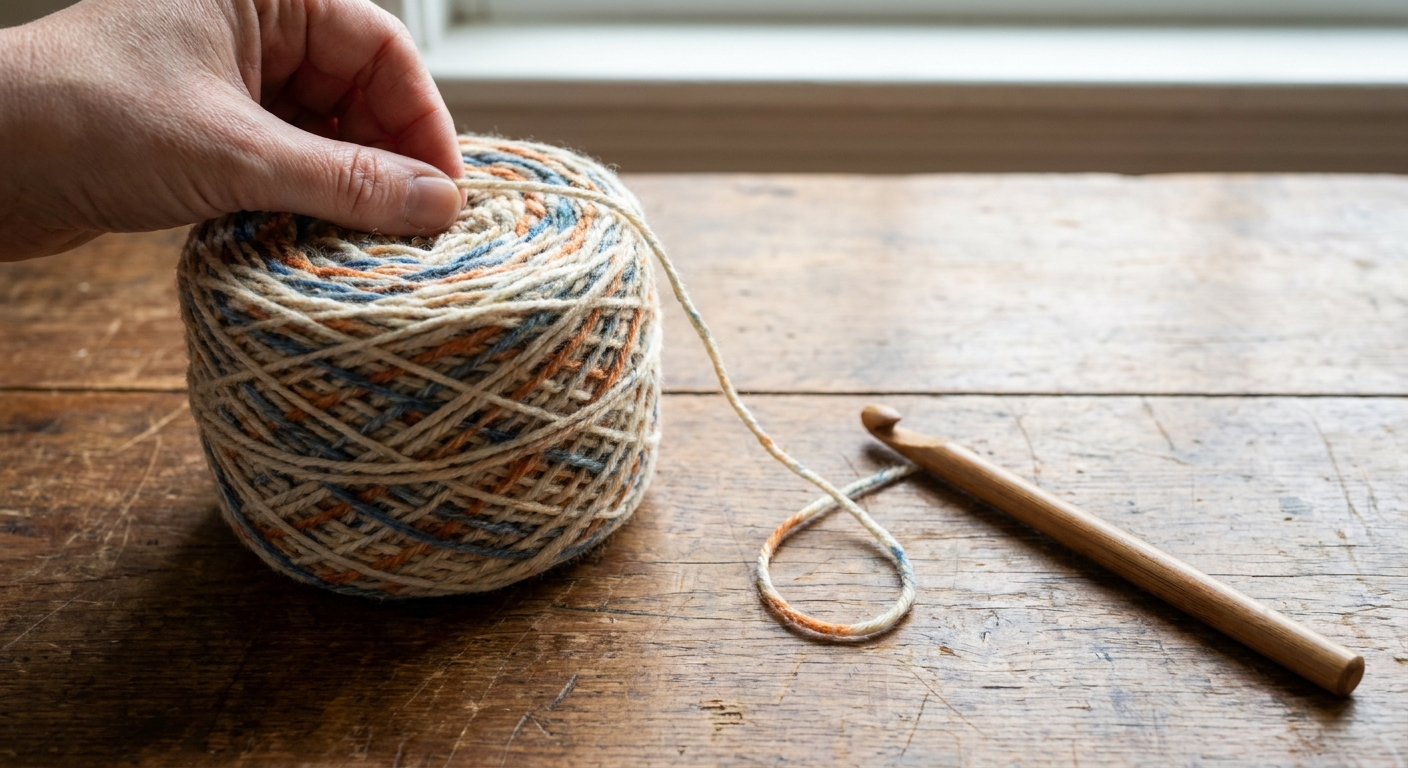
A yarn cake is usually made with a ball winder, which wraps yarn into a soft cylinder with a visible center opening. The yarn is still the same yarn, but the way it unwinds changes the forces on the strand and on you.
- Center pull means the yarn slides out through the middle. The cake stays mostly in place, but the inside can collapse as you work.
- Outside pull means the yarn comes off the outer edge. The cake often rolls or spins, and many people find the feed feels steadier once the cake can move freely.
Neither method is “right.” They just behave differently, and some yarns and colorways definitely have opinions.
One quick note: some commercially wound “cakes” are tighter than home-wound ones, with a firmer core. Those often center-pull beautifully, while a softer, loosely wound cake might collapse faster and feel fussier from the middle.
Center pull: the cozy, stationary option
Center pull is popular for a reason. You can tuck a cake beside you and crochet without it skittering across the floor. When it behaves, it feels wonderfully smooth.
Pros of center pull
- The cake stays put. Great if you crochet on the couch, in the car, or anywhere the yarn might roll away.
- Less snagging on furniture and project bags. No rolling cake to catch on zippers or chair legs.
- Easy to manage multiple cakes. If you are doing colorwork, center pull cakes are less likely to tangle with each other from rolling.
Cons of center pull
- “Yarn barf” is real. That first pull can bring out a wad from the center. It is not your fault. It is physics and winding tension.
- The cake can collapse. Once the core loosens, the whole cake can slump and cause snags.
- Twist can look different as you work. Center pull does not magically “re-ply” your yarn, but because the strand is being pulled from a package that is not freely rotating, some yarns will show twist buildup or twist loss more noticeably. The result can be a little more splitting or a slightly different stitch definition, depending on the fiber and ply.
When I choose center pull for color transitions
I reach for center pull when I want the yarn to feed steadily while the project stays in one place, especially for projects where I am not constantly turning at the end of rows. In the round, center pull can feel very controlled.
If you are working something like an easy accessory with long, continuous rounds, center pull is often a comfy match. For example, variegated and self-striping yarns are lovely in simple shapes like scarves, and you can see how color pools as you go. If you like that style of project, my one skein infinity scarf for variegated yarn is a great place to enjoy the colorway without complicated shaping.
Outside pull: the steady setup option
Outside pull is a little less popular in casual crafting spaces because the cake may roll. But if you set it up so it can spin smoothly, many crafters find it feels more predictable, especially once the outside layers start coming off evenly.
Pros of outside pull
- Often a more consistent feed. When the cake can spin freely, the yarn peels from the outside in a way that can feel smooth and steady.
- Fewer surprises from the core. No hidden clumps waiting in the middle.
- Can help you keep a steady tension rhythm. Not a guarantee, but for many people, fewer stop-start snags means fewer accidental tight stitches right when a new color begins.
Cons of outside pull
- The cake moves. Unless it is in a yarn bowl or a tote, it can roll, bounce, and occasionally try to escape.
- More exposure to friction. If the cake is rubbing against fabric or a rough surface while it spins, you might feel drag and that can change your tension.
- It can unwind into a mess if the tail gets loose. If the outside end slips and you drop the cake, it can loosen fast.
When I choose outside pull for color transitions
If I am working rows back and forth and I care deeply where the stripe lands, I often go outside pull. Not because it is magically “better,” but because a smooth-spinning cake helps me keep my hands consistent from stitch to stitch, which helps transitions look less jumpy.
This can matter on projects where you really see row lines, like dishcloths, placemats, and other flat pieces. If you want a satisfying swatch-sized project to test this, my textured cotton waffle stitch dishcloth is a perfect tension laboratory.
Tension management: the real transition helper
A lot of “messy” transitions come from tension changes right as the new color starts, especially if the yarn is snagging or you unconsciously tug to “help” the switch. But it is not the only cause. Pooling, stitch height, and how the yarn was dyed can have an even bigger impact than tension some days.
My simple tension checklist
- Keep the cake at the same height as your hands. If the yarn is below you in a bag, you will pull up and add tension. If it is above you on a table, you may pull down and loosen.
- Avoid sharp angles. Yarn should travel in a gentle line, not around chair arms or through half-closed zippers.
- Use the same grip at transitions. When the color changes, resist the urge to “help” it by tugging. Let the feed stay natural for 4 to 6 stitches.
- Pause and smooth. If you feel the yarn snag, stop and free it before you stitch. Stitching through a snag often creates a tight section that makes the next color look abrupt.
If you suspect your tension is shifting, a quick gauge swatch can tell you a lot, even for crochet. I have a knitter-focused guide that still explains the mindset beautifully: how to knit and block a gauge swatch. The idea is the same: measure what your hands are doing, then adjust calmly.
Colorway planning: get stripes to land on purpose
Self-striping and long variegated cakes can look magical, but they are not mind readers. If you want transitions to feel intentional, plan for them just like you would plan for stitch count.
1) Find the repeat before you commit
Unwind a small length and look for the pattern: does it repeat in clean blocks, or does it blend gradually? Clean blocks are easier to “place.” Gradual blends look best when you avoid sudden tension changes.
2) Decide whether you want symmetry
For two sleeves, two socks, or two mitts, the same color sequence matters. Cakes can help because the color order is visible. I like to pull a length, note where a color change begins, then start both pieces at the same point.
3) Use a deliberate start point
If the cake begins with an odd little section you do not love, you can simply skip it. Wind off that amount and save it for seaming, a pom pom, or a small accent stripe.
4) If the transition lands mid-row, pick a strategy
- Let it happen for a more organic, watercolor look.
- Change at the edge by cutting and rejoining so the new color starts at the beginning of a row or round.
- Stagger on purpose by alternating where you start each row so the color shift forms a gentle diagonal.
If you are exploring self-striping yarn beyond crochet, you might enjoy 10 best knitting stitches for self-striping yarn. It is a fun reminder that sometimes the stitch pattern is doing half the design work for you.
Common yarn cake problems and quick fixes
The center collapses and the cake turns into a lumpy donut
- Fix: Put the cake in a mug or a small bowl so the sides are supported.
- Prevention: If you know a cake collapses easily, consider outside pull from the start.
I pulled from the center and got a huge wad
- Fix: Do not yank. Gently tease the loops apart until you find the strand that feeds smoothly. Then wind the excess into a small ball and keep going.
- Prevention: Before you begin, pull out a few feet from the center and re-roll that loose section into a tiny starter ball. It reduces the chance of a sudden clump.
The cake keeps twisting my yarn
- Fix: Let the project dangle occasionally to untwist, or switch pull direction. If you are crocheting, you can also change how you hold the strand so it is not wrapping around your fingers at a tighter angle.
- Extra tip: If you notice splitting getting worse when twist builds, take a peek at stop yarn splitting while knitting. The handling tips apply beautifully to crochet too.
Outside pull is smooth, but the cake rolls everywhere
- Fix: Set the cake in a yarn bowl, a basket, or even a clean mixing bowl so it can spin without traveling.
- Prevention: Keep the outer tail tucked under one strand on the outside when you pause, so it does not loosen and unravel.
I think I’m accidentally working from both ends
- Fix: Stop, find the strand that is actively feeding your stitches, and commit to that one. Wind the other loose end into a small separate ball and tuck it into the center or under an outer wrap so it cannot sneak back out.
- Prevention: Before you start, identify both ends and tie a loose little bow around the one you are not using (no tight knots). It is the simplest way to prevent the dreaded two-ended tangle.
My rule of thumb
If you want a quick decision, here is the choice I make most often:
- Choose center pull when portability and a stationary cake matter most, or when you are working in continuous rounds and want the yarn to feed from one spot.
- Choose outside pull when you want the steadiest possible feed and you can control the setup (a bowl, a basket, or a smooth surface) so friction and bouncing do not mess with your tension.
And if you try one method and it feels fussy, you are allowed to switch mid-project. Seriously. Crafting is supposed to be the relaxing part of your day, not a test of loyalty to a yarn cake.
FAQ
Does center pull change my gauge?
It can, especially if the cake collapses and the yarn starts snagging. Any snagging encourages you to tug, and tugging tightens stitches. If your gauge matters, focus on keeping the feed consistent and consider outside pull if center pull keeps catching.
Will pulling from the outside mess up my color order?
Not if you start from the same end of the yarn. The tricky part is that many cakes have both ends accessible, and it is easy to accidentally switch ends (inside end versus outside end). If you start from the opposite end, the color sequence can reverse.
Why do my color transitions look jagged in crochet?
Crochet stitches have height, and color changes often happen mid-stitch. For the cleanest look, change colors on the last yarn over of the stitch before the new color, and keep your tension steady for the first few stitches of the new shade.
Is a yarn cake the same as a skein?
Not exactly. Many skeins can be wound into cakes, but the winding tension and shape are different. Cakes are designed to feed easily, but they still have preferences depending on fiber, ply, and how tightly they were wound.