
Crocheted Easter Baskets: Jute vs Macrame Cord vs Super Bulky Yarn

Every spring I get the same itch: I want an Easter basket that can actually stand up on its own, survive a slightly overexcited egg hunt, and still look cute sitting on a shelf afterward. The secret is not just the stitch pattern, it is the fiber. Jute, macrame cord, and super bulky yarn can all make baskets, but they behave very differently once you start building those upright sides.
Below is how I choose between them when I want a basket that feels sturdy in the hand and holds its shape without fighting me the whole time.
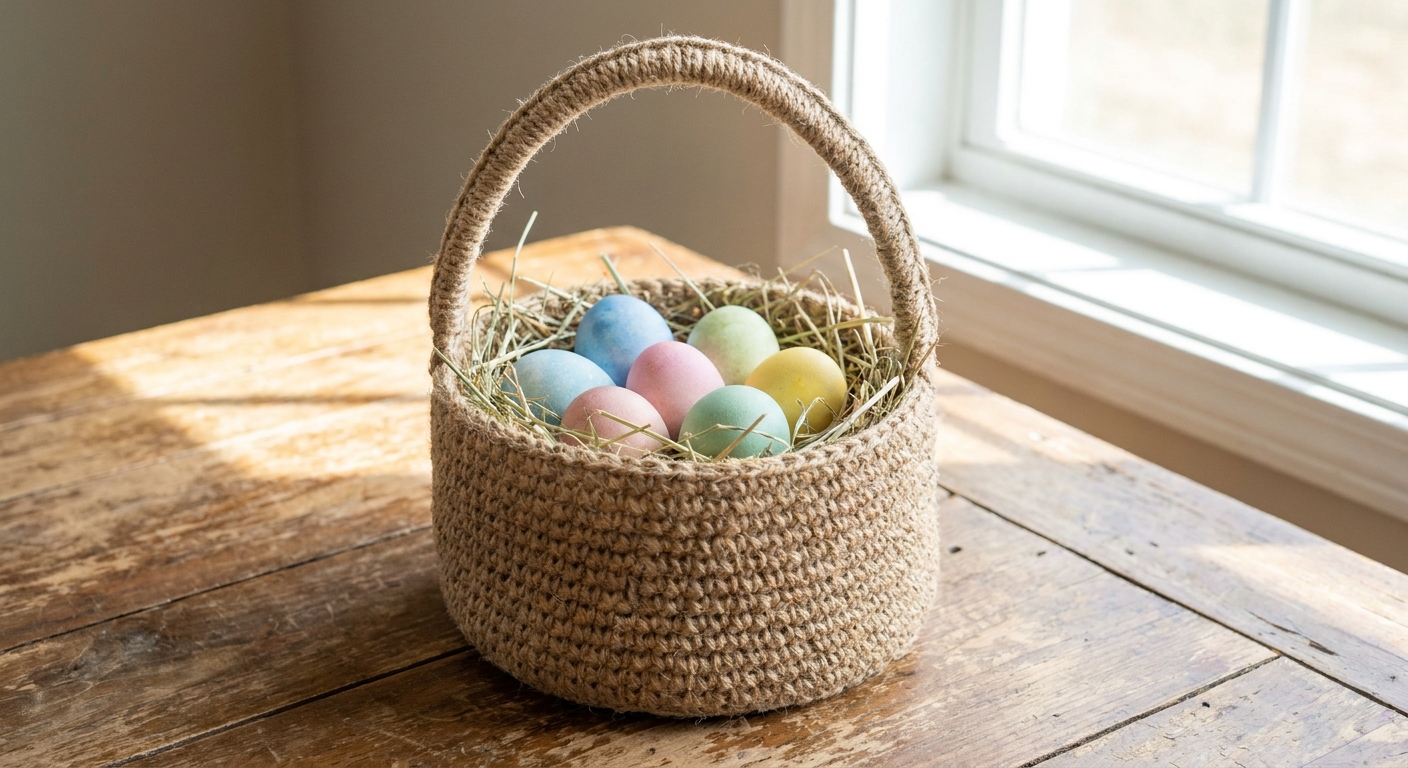
What makes a basket stand up?
Before we compare fibers, here are the four levers you can pull to get an upright, durable basket. Fiber choice affects all of them.
- Low stretch: Stretchy fibers relax and the sides flare or slump.
- Surface friction: Grippy fibers lock stitches together, which helps stiffness.
- Thickness and density: Thicker material can be stiff, but only if your stitch fabric is tight enough.
- Construction choices: A tight gauge, firm single crochet, and a stable base shape do more than any cute stitch ever will.
If you want a basket that stands up without inserts, your goal is a firm fabric: tight stitches, minimal stretch, and enough body to resist folding.
Quick fiber comparison
| Fiber | Stiffness (no stiffener) | Durability | Comfort to crochet | Best for |
|---|---|---|---|---|
| Jute (twine) | High | High (best kept mostly dry) | Harder on hands | Rustic baskets that hold shape, lively egg hunts |
| Macrame cord (often cotton) | Medium to high | High | Moderate | Crisp, modern baskets with clean edges |
| Super bulky yarn | Low to medium | Medium | Easy | Soft, kid-friendly baskets and fast makes |
A quick note on thickness: for cord-based baskets, diameter drives structure as much as fiber does. A thicker cord generally stands up better, but it will also make your stitches bulkier and your basket heavier.
Jute
Jute is my pick when I want a basket that behaves like a basket the second it comes off the hook. It is naturally stiff, it has lots of grip between stitches, and it does not bounce back the way woolly yarns can. That combination makes it fantastic for upright walls.
How it behaves
- Structure: Excellent. Jute wants to be a container.
- Stretch: Very low, which helps keep sides from bulging.
- Finish: Rustic and textured, with visible stitch definition.
- Comfort: Can be scratchy. Long sessions may tire your hands if you crochet tightly.
My best tips for jute
- Use a hook that is slightly smaller than you think you need. You want a dense fabric, not a lacy one. If you can easily push the hook through visible gaps, go down a size.
- Choose simple stitches. Single crochet (especially in the back loop only) gives clean ridges and strong walls.
- Plan a sturdy handle. Jute is strong, but it can abrade. Crochet a thick handle or add a crocheted wrap over the handle area your hand will hold most.
- Mind the ends. Jute ends can look fuzzy. Weave in generously and trim carefully.
- Make it easier on your hands. A cushioned hook grip helps, and I will sometimes add a little tape to the handle or take breaks more often with rough twine.
When I would not use jute: if the basket is for a tiny child to carry for long periods, or if you know someone has sensitive hands. Jute can be rough against skin.
Macrame cord
Macrame cord sits in a sweet spot between soft yarn and basket material. It is often cotton, but you will also see polyester and nylon versions, so it is worth checking the label if you have strong preferences. Either way, it is typically smoother than jute, more comfortable to crochet, and it can hold shape beautifully when worked at a firm gauge.
How it behaves
- Structure: Very good, especially with a tight stitch fabric.
- Stretch: Low to moderate depending on the cord twist and strand structure.
- Finish: Crisp, modern, and tidy. Great stitch definition.
- Comfort: More pleasant than jute for most hands.
My best tips for macrame cord
- Pick the right cord type. Braided cord usually resists splitting and makes more consistent stitches. Twisted multi-strand cord can split and slow you down.
- Match hook size to your goal. If the basket feels bendy, a smaller hook and denser fabric usually fixes it fast.
- Lean into shaping. Cord shows angles well, so clean increases on the base and a deliberate turn round look extra polished.
- Use a firm base technique. Work the base in tight single crochet. Once the base is stiff, the walls behave.
When I choose macrame cord over jute: when I want a basket that looks refined on a shelf after Easter, or when I want structure without the scratchy texture.
Super bulky yarn
Super bulky yarn makes the quickest Easter basket, and it is undeniably fun. The downside is physics: many super bulky yarns are lofty and compressible, which means the basket can slump unless you help it with stitch choice, gauge, or reinforcement.
How it behaves
- Structure: Variable. Some are surprisingly stable, many are floppy.
- Stretch: Often moderate to high, especially with acrylic or wool blends.
- Finish: Plush and chunky. Stitch definition depends on ply and twist.
- Comfort: Very comfortable and beginner-friendly.
How to make super bulky behave
- Go down a hook size. Tighten your fabric first. Floppy baskets often come from recommended hook gauge.
- Use single crochet, not taller stitches. Double crochet walls collapse more easily.
- Crochet the first wall round in back loop only. This helps the wall stand more upright and adds a clean ridged turn.
- Add stability at the rim. A final round of slip stitch or crab stitch (reverse single crochet) can firm up the opening.
When I love super bulky: for toddler baskets, for last-minute makes, or when I want a soft basket that doubles as spring decor and will not scratch little hands.
My picks by goal
Most upright with no extras
Choose jute. It is naturally stiff and low stretch, and it rewards simple stitches with great structure.
Neat and modern, strong shape
Choose macrame cord. It gives clean edges and durable walls, with less roughness than jute.
Softest and fastest
Choose super bulky yarn. Just plan on tighter gauge and a firm rim.
Structural tricks
No matter what you pick, these techniques make a noticeable difference in stiffness and durability.
- Work a flat, dense base. A wavy base leads to a wobbly basket. If it ruffles, you are increasing too much. If it bowls, you are increasing too little.
- Build a clear corner. Working in back loop only or creating a ridge in the first wall round helps the wall stand up instead of rounding outward.
- Keep your tension consistent. Baskets show uneven tension quickly because the fabric is meant to be firm.
- Reinforce handles. Crochet handles thick, or crochet a strap and stitch it down securely with multiple passes.
- Consider an optional lining. I aim for dense single crochet so candy and grass do not poke through, but a simple fabric lining is a nice upgrade if you want the inside extra smooth.
If you like planning your projects before you start, I keep myself from making wobbly baskets by jotting down fiber, hook size, target dimensions, and handle plan on a simple card before I crochet the base. It saves me from frogging later. If that sounds like your style, you might enjoy my approach in Make a Project Card Before Starting Crochet.
Care and egg hunt reality
Jute
Jute does not love soaking baths. Spot clean when possible and let it dry fully. It is tough for a quick outdoor hunt, but damp grass and mud can stain, and repeated moisture can weaken natural fibers over time. If the yard is soggy, I will choose cord or easy-care yarn instead.
Macrame cord
Cotton cord is generally forgiving. It can be spot cleaned, and many cotton cords handle gentle washing, but always test first. Cotton can relax slightly with use, so a tight gauge helps it keep its shape. Synthetic cords can be even easier to wipe down, but they may feel a bit springier depending on the construction.
Super bulky yarn
Care depends on fiber content. Acrylic is easy, wool can felt, chenille can worm and shed. For egg hunts with sticky hands and candy, I prefer an easy-care acrylic super bulky and a dense stitch fabric.
FAQ
Which fiber makes the stiffest basket?
In my experience, jute is stiffest straight off the hook. Macrame cord is close behind, especially when crocheted tightly. Super bulky yarn can be sturdy, but it is the least reliably stiff because many options are designed to be soft and lofty.
Do I need starch or stiffener?
If you use jute, often no. If you use macrame cord, usually no if your gauge is firm. With super bulky yarn, you might want reinforcement techniques instead of stiffener, like tighter gauge and a firmer rim. If you are curious about stiffening techniques for decorative items, my winter ornament post covers thread and stiffening basics that translate well to basket experiments: Crisp Crochet Snowflake Ornaments: Thread Size and Starching.
What stitch is best for sturdy walls?
Single crochet is my go-to for structure. Back loop only can help the wall stand more upright and adds ridging, but like any technique it depends on your fiber and tension. If your sides feel stretchy, the fastest fix is usually a smaller hook and denser fabric.
My basket flares out. What happened?
Most flare comes from either a base that is slightly ruffled, or walls that are too loose. Try a smaller hook, tighter tension, and a firm turn round (back loop only is the easiest fix).
More holiday crafts
I keep all our seasonal makes gathered in one place so you can browse by holiday mood. You can explore more projects in Guide: Holiday Crafts.