
Ergonomic Knitting With Chunky Yarn

The first time I knit a super chunky cowl, I expected the “big yarn, quick win” magic. What I did not expect was how fast my hands would feel tired, like I’d been gripping a grocery bag by the handles for an hour. Chunky yarn is wonderfully cozy, but it asks more of your hands: more weight in your lap, more resistance through each stitch, and often bigger needles that change your wrist angle.
The good news is that preventing hand fatigue is mostly about tiny adjustments. A softer grip, a supported project, and a steadier pace can make chunky knitting feel relaxing again.
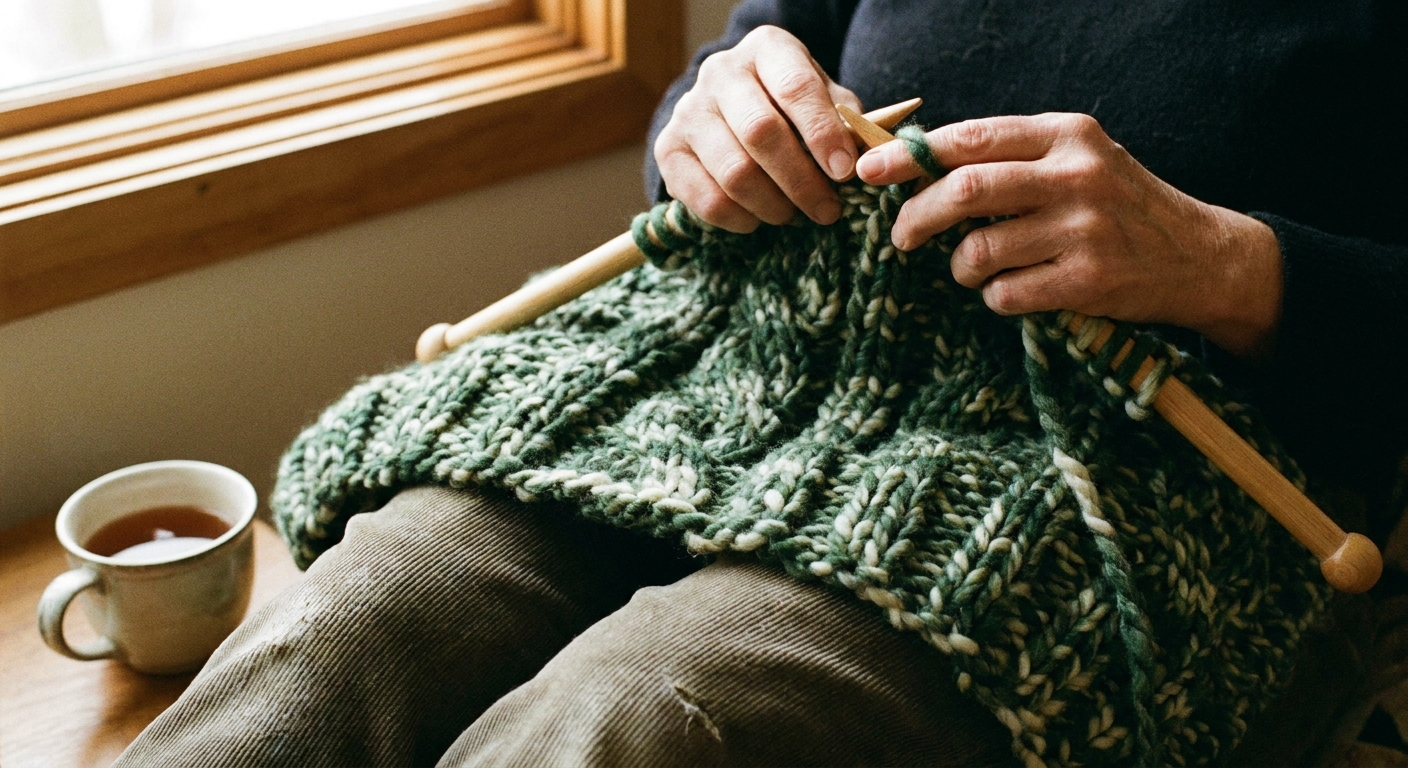
Why chunky yarn feels harder
If your hands ache faster with chunky projects, it is not your imagination. Here is what changes when the yarn gets thicker:
- More weight: a growing blanket or sweater in super bulky yarn gets heavy quickly, and your hands end up helping to hold up the project.
- More friction: thick yarn and big stitches can drag on the needle surface, especially if the yarn is a bit grippy.
- Bigger movements: larger needles can encourage wider wrist motion and more elbow lift, especially when you are trying to speed along.
- Tighter squeezing: many knitters unconsciously pinch harder to control big stitches, which tires the thumb and first two fingers.
I like to think of it this way: chunky yarn is not inherently “bad,” it just makes any little tension habit louder.
Set up your body first
Ergonomics starts with where the work happens. If your shoulders are creeping up toward your ears or your wrists are bent for long stretches, your hands pay for it.
Sit so your feet are supported
When your feet are planted, your pelvis is steadier, your shoulders relax, and your hands stop trying to compensate. If your chair is tall, tuck a footstool, yoga block, or firm cushion under your feet.
Bring the work up
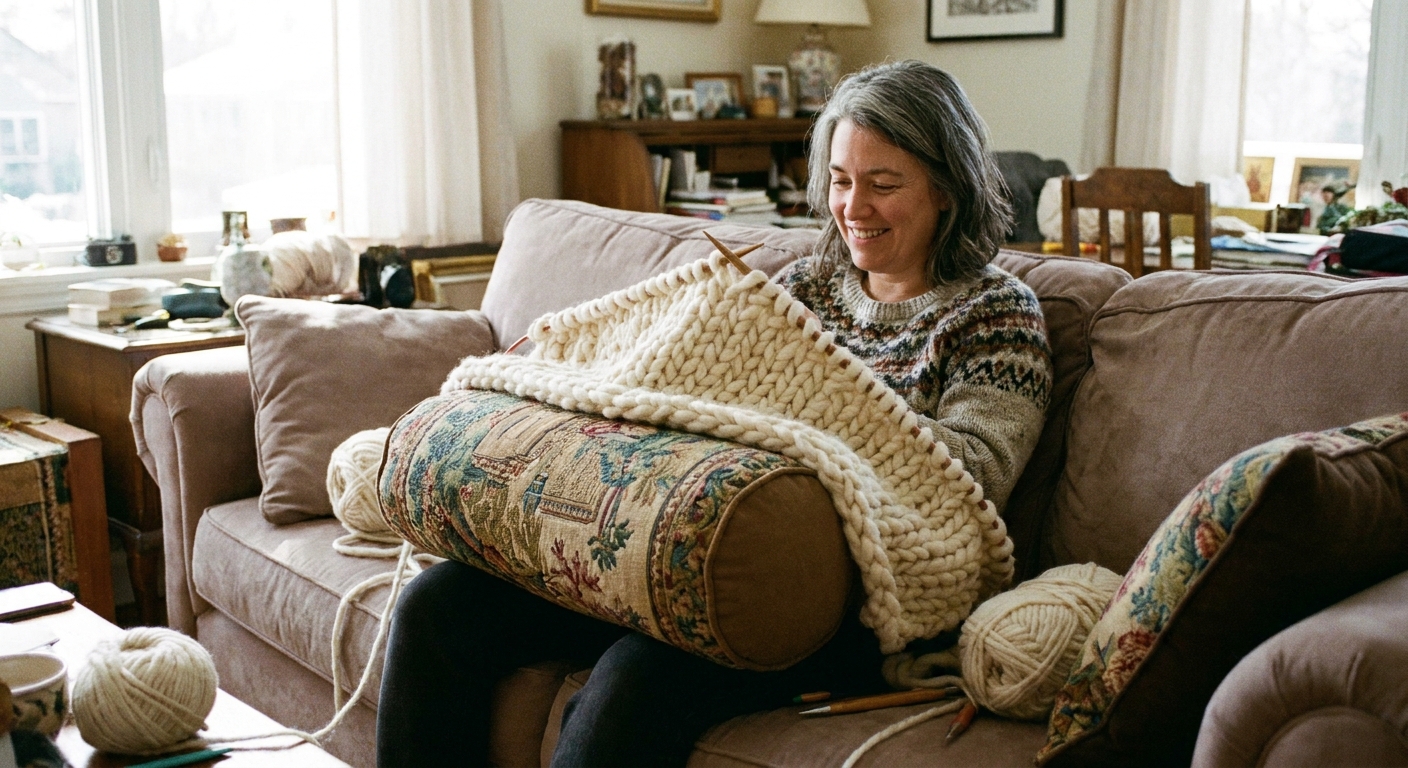
A common fatigue chain is head forward, shoulders rounded, elbows tucked, wrists bent. The fix can be as simple as a pillow on your lap or a lap desk so your hands sit closer to mid-torso.
Support the project weight
Chunky fabric gets heavy fast. Try one of these:
- Laptop pillow or firm bed pillow on your lap to hold the bulk.
- A tote bag beside you to cradle the project, letting only a small section sit in your hands.
- Circular needles so the cable carries the weight instead of your fingers.
Grip: the fastest relief
When my hands complain in chunky yarn, it is often a grip issue, not a strength issue. You want control without clamping.
Check for the white knuckle sign
Pause and look at your fingertips. If they are blanching, or you notice your thumb pressing hard into the needle, you are over-gripping. Aim for a hold that is secure but soft, like holding a paintbrush.
Use a three-point hold
A pinch grip (thumb to index finger) overloads the thumb joint. Instead, let the needle rest more in the crook of your hand with support from your middle finger. The goal is to spread pressure across more contact points.
Relax the waiting hand
Many knitters relax the active hand but keep the other hand rigid. Every so often, scan the hand that is simply holding stitches. It should not feel like a vise.
Make movements smaller
With chunky yarn, it is tempting to scoop big loops with big wrist flicks. Try keeping the motion closer to your fingers and letting your forearm stay quieter. Less wrist travel usually means less wrist irritation.
Needles that feel kinder
This is where you can buy yourself comfort without changing your pattern.
Use circular needles more often
Even if you are knitting flat, circulars let the cable hold the fabric’s weight. Straight needles keep weight suspended off the ends and can encourage a tighter, more controlling grip.
Match the needle surface to your yarn
If your chunky yarn drags, you work harder each stitch. Switching needle materials can be a surprising relief:
- Metal needles are often slicker and help bulky stitches slide.
- Wood or bamboo can feel warm and stable, but may add drag with fuzzy or grippy yarns.
If you love bamboo but your yarn grabs, you might find that a different finish (some woods are smoother depending on the polish) or a slightly larger needle helps stitches move with less resistance.
Choose a length that reduces wrestling
Overcrowded stitches create extra tugging. Too much empty space can also make you over-control. For chunky hats and cowls, a shorter circular can reduce awkward stretching. For blankets, a longer cable helps distribute weight.
Try a longer cable to avoid cramped hands
If your hands feel boxed in, a longer circular can give you room to spread stitches out. Some knitters also like using a long cable even on smaller items, simply because it keeps the working area from feeling tight and tense.
Size up, but protect your gauge
This is not about making your fabric sloppy. It is about avoiding the phase where every stitch has to be forced along. If your hands ache and your gauge is tighter than the pattern wants, going up a needle size often helps.
One caveat: sizing up can change the finished measurements and drape. If fit matters (like a sweater or hat), I always knit a quick swatch or at least measure a few inches of my fabric before I commit.
If you want a broader technique refresher before you start a big project, my knitting hub is here: https://crochetpatterncentral.com/guide-knitting/.
Tension tips for chunky yarn
Chunky knitting looks best when your stitches are even, but “even” does not have to mean “tight.”
Let the needle set the stitch size
After forming a stitch, resist the urge to cinch it down. Instead, slide it to the full diameter of the needle tip or barrel, then move on. This one habit change can noticeably reduce thumb strain over time.
Watch for tight purls
Purl rows often cause extra tension. If your hands ache during purling, try slowing down and consciously relaxing the thumb webbing (the fleshy area between thumb and index finger). I sometimes shake my hands out after every few inches on a purl-heavy chunky scarf.
Use the yarn path that keeps you relaxed
Whether you throw, flick, pick, or lever knit, the “best” method is the one that keeps your fingers neutral. A simple test: if your pinky is clamped, your index finger is locked straight, or your wrist is bent to manage the yarn, re-route the yarn. Add a wrap around a finger, or remove a wrap, until it feeds smoothly.
Pace yourself
Chunky projects finish quickly, which can trick us into marathon sessions. Your tendons do not care that it is “almost done.”
Use a timer for micro-breaks
I like a 20 to 30 minute interval. When it goes off:
- Drop your hands to your sides for 10 seconds.
- Roll your shoulders back slowly 5 times.
- Open and close your hands 10 times without force.
This is not about doing a full workout. It is about reminding your body that it can stop bracing.
Switch tasks to change the load
If you are making a chunky blanket, consider breaking the rhythm:
- Knit one section, then weave in one end.
- Stand up and lay the project flat to admire progress. It resets your shoulders and neck.
Gentle warmups
I keep these gentle because aggressive stretching can backfire if you are already irritated.
Before you start (1 minute)
- Wrist circles: slow circles both directions, 5 each.
- Finger fans: spread fingers wide, then relax, 8 to 10 times.
- Thumb glide: touch thumb to each fingertip lightly, then release.
During breaks (30 seconds)
- Shake-out: hands loose, gentle shake like you are flicking off water.
- Neutral reset: let your arms hang by your sides, then slowly bend and straighten your elbows a few times while keeping your wrists relaxed and straight.
Project tweaks that help
If a chunky pattern is pushing your hands too hard, you can often adjust without changing the look much.
Choose calmer stitch patterns
Very dense stitch patterns in bulky yarn can feel like wrestling a mattress. If your hands are sensitive, consider:
- Stockinette with a tidy edge treatment
- Simple ribbing
- Garter stitch for squishy drape
Keep seams minimal
Seaming thick fabric can be surprisingly taxing on fingers. Circular construction or fewer, longer seams can be more comfortable.
Pick smaller chunky projects
If you want the joy of chunky yarn without the weight, choose projects where the fabric does not grow into a lap-sized boulder. Hats, cowls, and quick beanies are perfect for this. If you also crochet, you might enjoy my chunky ribbed crochet beanie pattern as a hands-on, fast finish.
When pain is a warning
Normal tiredness feels like general fatigue that improves with rest. Warning-sign pain is sharper, numb, tingly, or persistent.
- Stop if you feel tingling, burning, or numbness. When it shows up in the thumb, index, and middle fingers, it can be a sign of nerve irritation, so I treat it as a loud signal to pause.
- Stop if pain wakes you at night or lingers into the next day.
- Get medical guidance if symptoms persist or worsen. A clinician or hand therapist can help you pinpoint the cause and protect your long-term comfort.
I am endlessly in favor of listening early. There will always be time to finish the blanket, but your hands have to last you through all the blankets you have not dreamed up yet.
Quick comfort checklist
- Feet supported, shoulders relaxed
- Project weight resting on lap, pillow, bag, or cable
- Grip soft enough that your thumb is not pressing hard
- Wrists mostly neutral, movements small
- Needles that let stitches slide without tugging
- Micro-breaks every 20 to 30 minutes
If you want one extra habit that truly helps, it is this: every time you admire your work, use that moment to drop your shoulders and relax your jaw. Chunky yarn loves a calm knitter.