
Best Yarn for Heirloom Crochet Stockings: Wool vs. Acrylic

I have a soft spot for Christmas stockings because they get handled in a way most crochet projects do not. They are tugged off hooks by excited hands, stuffed until the seams feel brave, and stored for eleven months in whatever bin is closest. If you want a stocking that still looks polished and cheerful twenty Christmases from now, the yarn choice matters as much as the pattern.
Let’s compare wool vs. acrylic with three heirloom questions in mind: durability, colorfastness, and blocking and shape retention.
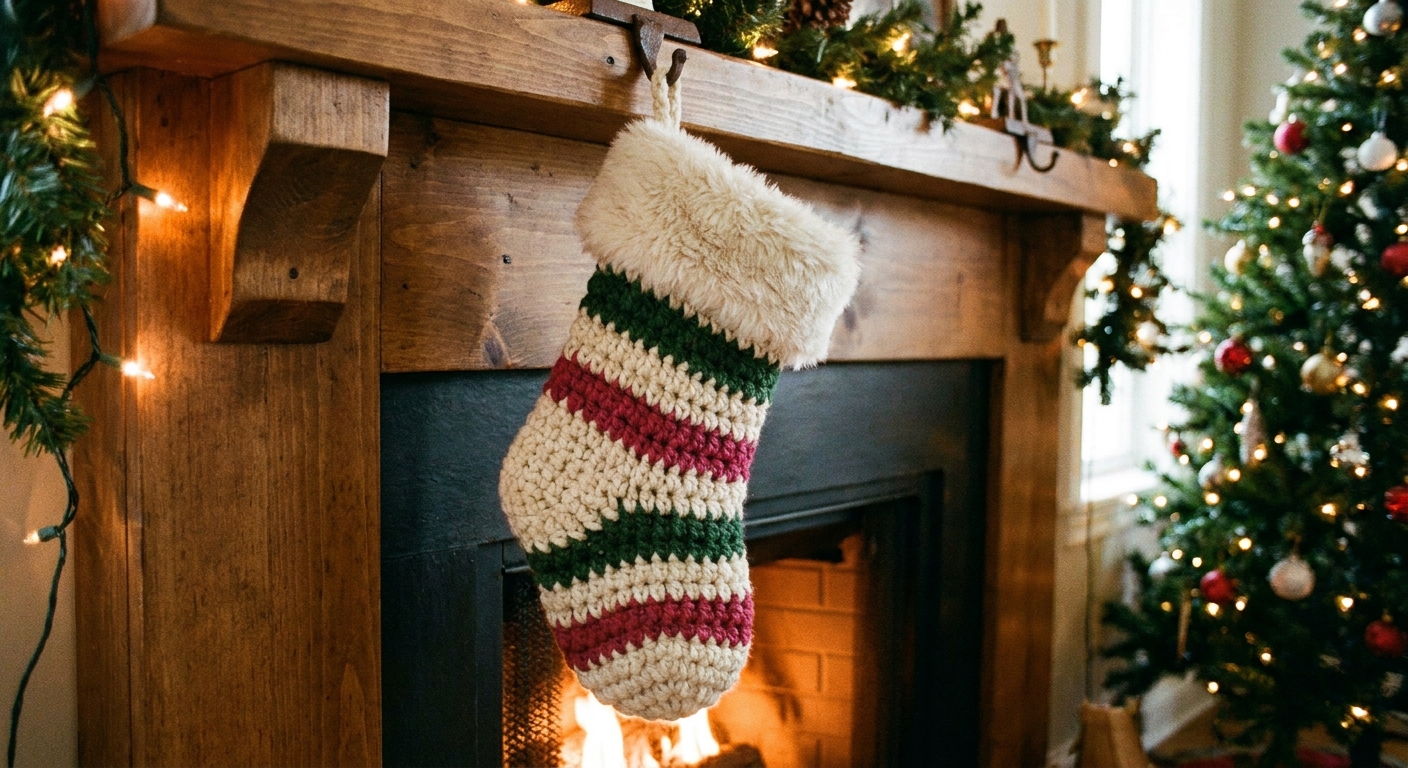
What “heirloom” means
An heirloom stocking is not just “nice yarn.” It is a stocking that:
- Holds its shape at the toe, heel, and hanging loop.
- Stays attractive after repeated handling, including abrasion where it rubs against the mantel or hook.
- Keeps colors clear, especially bold reds, deep greens, and high-contrast white cuffs.
- Can be cleaned safely after a season of pine needles, chocolate fingerprints, and mystery smudges. (If you have a fireplace, smoke and soot tend to show up on light cuffs no matter what fiber you choose, so plan on spot cleaning either way.)
If you are still getting comfortable reading patterns, I have a friendly walkthrough in our crochet patterns guide that helps you spot details like yarn weight, gauge, and finishing steps that affect longevity.
Durability
Wool durability
Wool is naturally elastic and springy. That bounce is wonderful for stockings because it helps the fabric recover after being stuffed. Wool also tends to wear in rather than simply wear out, meaning it often softens a bit with time while keeping its resilience, especially in a firmly spun yarn.
- Strengths: Great bounce-back, resilient fabric, long-term shape recovery.
- Watch-outs: Wool can pill (those little fuzzy balls) when there is friction, especially with softer, loftier wools. It can also felt if washed with heat, agitation, and changing temperatures.
For heirloom stockings, I prefer a wool that is not ultra-delicate. A smooth, plied wool (think “workhorse sweater yarn” feel) handles decades of mantel life better than a very airy single-ply.
One more nuance: If you are considering superwash wool, it can be a helpful middle road because it reduces felting risk and may tolerate gentler machine washing. The tradeoff is that some superwash wools can relax or grow a little more than non-superwash, so firm gauge and good drying habits matter for shape retention.
Acrylic durability
Acrylic is a champion of everyday practicality. It is generally tough, resists moth damage, and tolerates storage well. If your household is hard on holiday decor, acrylic can be an excellent choice.
- Strengths: Very resistant to insects, generally sturdy, usually easy-care.
- Watch-outs: Acrylic fibers can stretch and stay stretched over time, especially in heavier stockings, looser stitch patterns, or yarns with a softer, less structured construction. A tighter gauge and a more structured stitch pattern go a long way toward preventing that.
My durability takeaway: If you crochet a dense fabric (smaller hook, firm gauge), both fibers can last. Wool often recovers shape better; acrylic often tolerates rough handling and storage better.
Colorfastness
Colorfastness is the quiet heartbreak of heirloom holiday makes. Stockings spend time near heat sources, may get washed occasionally, and often sit pressed against other textiles in storage.
Wool colorfastness
Wool takes dye beautifully and often looks rich and dimensional, especially in reds and greens. The risk is not that wool cannot be colorfast. The risk is care mismatch.
- Best case: A well-dyed wool, gently washed, keeps beautiful color for years.
- Common problem: One rushed wash cycle can cause color bleeding, felting, or distortion.
If you choose wool, I strongly recommend doing a small soak test with your swatch: soak in cool water with a tiny amount of wool wash, blot in a white towel, and check for dye transfer before you commit.
Acrylic colorfastness
Quality acrylic is typically very color-stable in normal home laundering. It does not felt, and it is less likely to surprise you with dramatic dye bleed. That said, high heat drying, harsh cleaners, and long sun exposure can still dull or stress color over time, so gentle settings are your friend.
- Best case: Colors remain consistent through many gentle washes.
- Common problem: Some bright acrylics can look slightly flatter over time if they pill heavily or pick up surface fuzz.
My color takeaway: For families that will definitely machine-wash stockings, acrylic often wins for predictability. For a showpiece stocking with depth and a classic look, wool can be stunning, as long as you are willing to treat it with care.
Blocking and shaping
If you have ever made a stocking and thought, “Why does the toe look like a potato,” you already understand why blocking matters. Stockings are basically sculpture: heel, instep, toe, cuff, and a hanger that has to stay strong.
Wool blocking
Wool is often considered the gold standard for blocking because it responds so well to moisture and gentle heat. You can wet block a wool stocking into a clean, intentional shape and it will generally set and behave.
- What wool does well: Opens stitch definition, smooths uneven tension, sets shaping, helps seams lie flatter.
- Heirloom perk: If a stocking gets distorted in storage, wool often re-blocks beautifully.
Acrylic blocking
Acrylic does not block the same way. Wet blocking can help relax the fabric a bit, but it usually will not lock in shaping as strongly as wool. Acrylic responds more to heat, but too much heat can damage it.
- What acrylic does well: Light wet blocking for evening out, simple reshaping after washing.
- What acrylic struggles with: Holding a sharply defined blocked shape long-term unless the fabric itself is dense and structured.
Real-life caution: Acrylic can shine, flatten, or even melt if it is exposed to high heat. If your stockings hang close to hot bulbs, heater vents, or a fireplace edge, give them a little breathing room regardless of how “easy care” the label sounds.
My blocking takeaway: If you want a stocking with sharp shaping and beautiful stitch definition (especially cables, textured stitches, or colorwork), wool is easier to perfect and to refresh year after year.
Which yarn to choose
Choose wool for structure
- You love a traditional look and clear stitch definition.
- You are willing to hand wash or spot clean.
- You want the stocking to hold a blocked shape over time.
- You are crocheting a design with texture, cables, or detailed shaping.
Choose acrylic for easy care
- You expect machine washing at least sometimes.
- Your household is tough on holiday decor (pets, kids, heavy stuffing).
- You want predictable color behavior and low maintenance storage.
- You plan to make a full matching set and want consistent dye lots and easy replacement.
A practical compromise
Many crocheters land in the middle: a wool blend (for bounce and easier shaping) or a higher-quality acrylic paired with a firmer gauge (for structure). If you are making multiple stockings, blends can be a sweet spot for consistent results and simpler care than pure wool.
Comfort and sensitivity
One very real heirloom factor is who will be grabbing that cuff. Some people find wool itchy, especially kids with sensitive skin. If you love wool’s structure but want a softer feel at the top, you have options: use wool for the body and choose a softer fiber for the cuff, add a simple fabric lining at the cuff, or plan a design where the wool section is not the part rubbing against wrists and forearms.
Make either fiber last
Crochet for structure
- Use a slightly smaller hook than the label suggests to create a denser fabric.
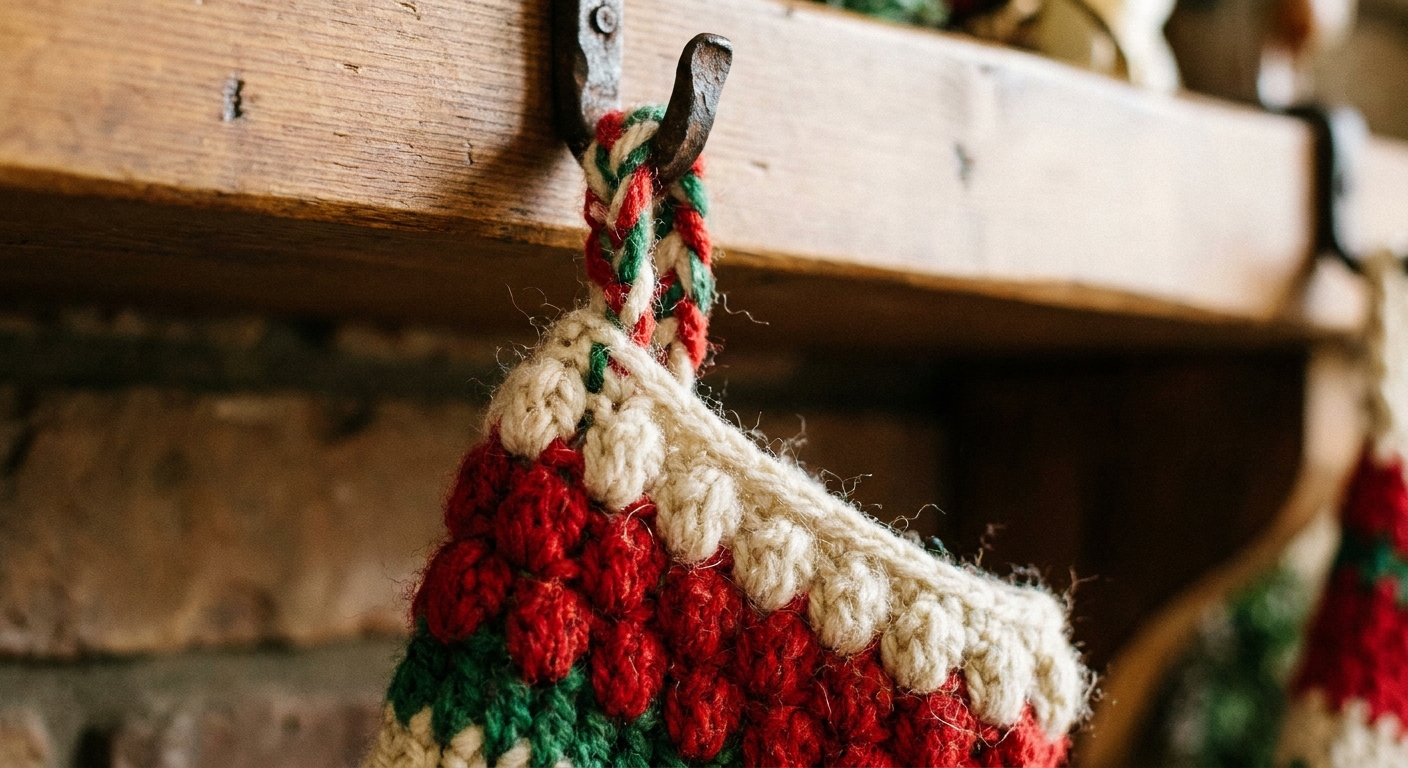
- Mind the hanger: reinforce the hanging loop with tight stitches, or crochet an I-cord style loop and sew it on firmly.
- Line it if needed: If your stocking will hold heavy gifts, a simple fabric lining can prevent stretching and reduce abrasion on the yarn.
Keep personalization neat
Surface crochet, duplicate stitch, and embroidery can all last, but they need anchoring. Weave in ends generously, and avoid long floats inside that can snag. If you like planning details before you begin, my process is in Make a Project Card Before Starting Crochet.
Store like you mean it
- Store clean and completely dry.
- Avoid crushing cuffs under heavy boxes.
- Keep away from high heat sources that can stress acrylic and dry out natural fibers.
Quick reference
| Feature | Wool | Acrylic |
|---|---|---|
| Durability under stuffing | Excellent bounce-back, resists permanent stretching | Sturdy but can stretch if heavy or loosely stitched; firm gauge helps |
| Colorfastness | Often rich color, but depends on dye and careful washing | Usually consistent, but avoid high heat and harsh cleaners |
| Blocking and shaping | Blocks well and resets nicely over time | Limited blocking; structure comes mostly from stitch density |
| Care | Often hand wash or gentle care (superwash may be easier) | Typically easiest for families, but keep away from high heat |
| Heirloom feel | Classic, warm, traditional | Practical, consistent, family-proof |
My bottom line
If your goal is a true heirloom stocking with strong shaping you can block and refresh for decades, I reach for wool first, preferably a smooth, plied wool that is not overly delicate.
If your goal is a stocking that survives real-life holiday chaos with minimal worry and predictable washing, a good acrylic worked at a firm gauge is hard to beat. Just keep it away from high heat, especially if your stockings hang close to a fireplace or hot lights.
And if you are making a whole mantel’s worth, there is no rule that says you cannot mix. I have seen families do wool for the “show” stockings and acrylic for the kid and pet stockings, and everyone stays happy.
For more holiday making ideas and seasonal crochet planning, you can browse our Holiday Crafts guide.