
Why Wool-Nylon Blends Make the Best Sock Yarn

The fastest way to break my heart is to see a beautiful handknit sock develop a thin spot right at the heel, right when it is finally perfectly broken in. I have made that mistake enough times to learn my favorite sock-yarn truth: the most comfortable socks come from wool, but the most wearable socks usually need a little help.
That help is nylon. A wool-nylon blend is the sweet spot where cozy and durable meet, which is why so many “real” sock yarns are built around that pairing. Let’s talk about what nylon actually does inside the yarn, what ratios to look for, and how to pick the blend that matches the way you wear your socks.
What nylon does
Nylon is not added for warmth. Wool already handles that. Nylon’s job is primarily reinforcement, although it can also nudge the finished feel a bit, often slightly smoother and less lofty than a 100 percent wool sock.
In a blended yarn, nylon fibers act like a tough, flexible backbone that helps the yarn resist abrasion. That matters most in the high-friction zones: heels, toes, the ball of the foot, and any spot that rubs inside shoes.
- It reduces wear-through. Wool fibers can felt and thin over time, especially if you walk hard on your heels or wear snug shoes. Nylon slows that process.
- It adds strength without turning your sock into a rope. Nylon is strong even in small amounts, so you can keep the comfort and bounce of wool.
- It can help reduce bagging. Shape retention is still mostly about wool elasticity, superwash treatment, gauge, and construction, but nylon can add a little extra resilience, especially in areas that get stretched and rubbed all day.
One important caveat: nylon does not replace good knitting. A dense, consistent gauge still does a lot of the heavy lifting for durability. If you want a refresher on checking fabric density before you commit, this swatch guide helps: how to knit and block a gauge swatch.
Also, a quick label-language note: you might see “polyamide” instead of “nylon.” For our purposes as sock knitters, that usually points to the same kind of tough, synthetic reinforcing fiber. Occasionally you will also see a tiny percentage of elastane (spandex) blended in for snap, but wool-nylon is still the standard base for most sock yarns.
Best nylon ratios
If you look at sock yarn labels long enough, a pattern jumps out. Most blends live in the 70 to 85 percent wool range, with 15 to 30 percent nylon. That window is popular because it works.
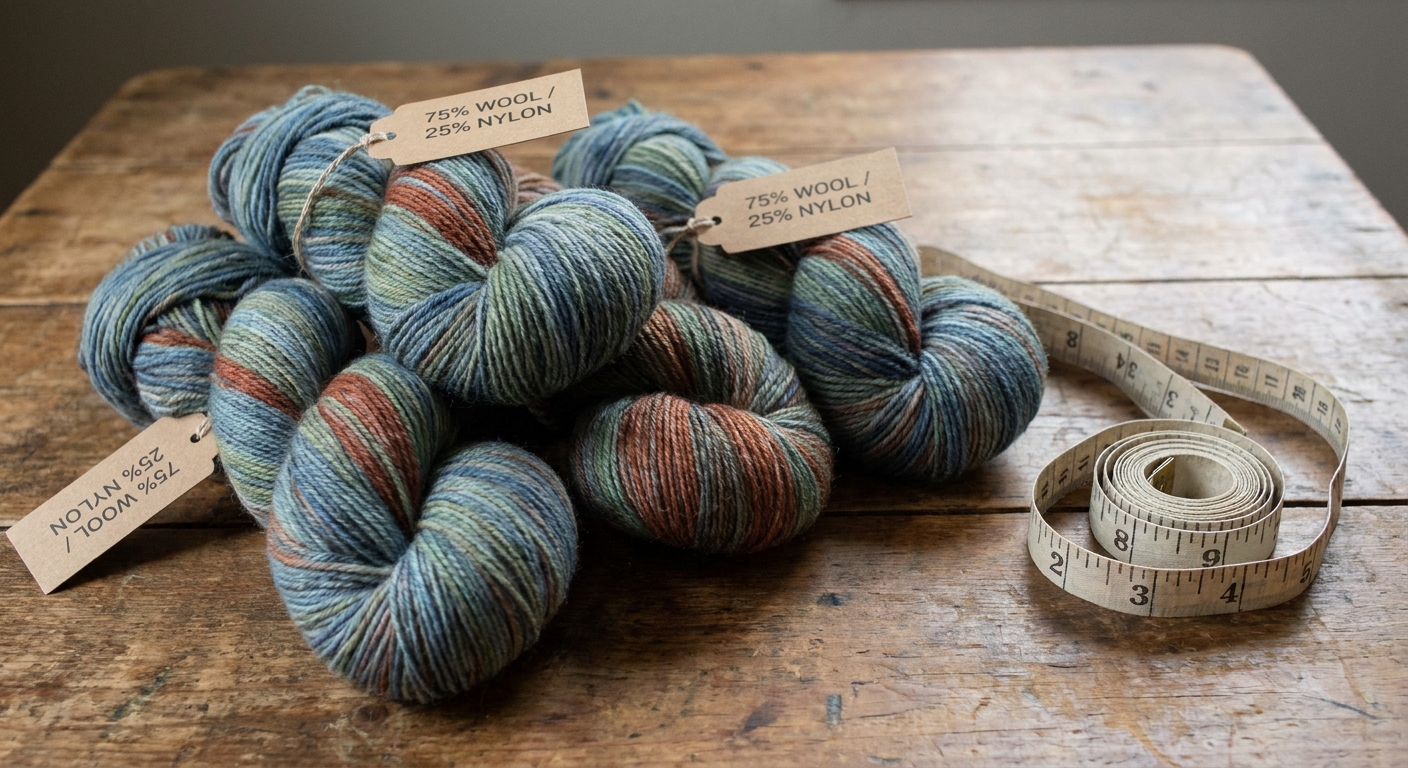
About 75% wool, 25% nylon
This is the classic “workhorse sock yarn” ratio. If I am knitting everyday socks for real shoes, real walking, and real laundry, this is where I start.
- Best for: daily wear, boots, commuting, socks for family members who will not baby them
- Feel: still very wool-forward, with noticeably better longevity
About 80% wool, 20% nylon
This is a slightly softer, woolier feel while still being firmly in sock-yarn territory. If you want a bit more warmth and drape, it is a nice compromise.
- Best for: lounge socks that still see some shoe time, gifts, lighter-wear schedules
- Feel: cozy and springy, just a touch less rugged than 75/25
About 85% wool, 15% nylon
This can be lovely, but I treat it like “gentle sock yarn.” It holds up fine for many knitters, but if you are hard on heels or do lots of walking, you may still see thinning sooner than you want.
- Best for: house socks, bed socks, socks for roomy clogs or slippers
- Feel: very wool-rich and cushy
Higher nylon blends
Once you get above about 30 percent nylon, it becomes less common in mainstream sock yarns and tends to lean more utilitarian. That can be great for heavy-duty wearers, but it may feel a little less woolly and can change how your finished socks block and relax.
If you are experimenting, start with one pair and take notes, even just a few lines about how the fabric feels and how it wears after a month. I am a big fan of simple planning and tracking for that reason: make a project card before starting.
Picking the right blend
Ratios give you a starting point. The real secret is matching the yarn to your actual life. Here are the questions I ask myself before I buy.
How will you wear them?
- Shoes all day: Aim for a true sock yarn, ideally around 75/25. Dense gauge, firm fabric, and nylon content matter here.
- Mostly at home: You can go woolier, like 80/20 or 85/15, and enjoy the extra softness.
- Boots and lots of walking: Stay closer to 25 percent nylon, and consider knitting the heel and toe at a slightly tighter gauge if your pattern allows.
What kind of wool is it?
“Wool” on a label can mean everything from sturdy down wool to very fine merino. Softer wools can pill and abrade faster, which makes the nylon percentage feel even more important.
If you are torn between fibers for wearables in general, this overview can help you think through tradeoffs: wool vs acrylic yarn for sweaters. Socks are a different beast, but the comfort versus durability mindset carries over.
How much bounce do you want?
Nylon can support resilience, but the finished feel is also shaped by your stitch pattern and construction. Ribbing and textured stitches can add recovery, while plain stockinette can show wear faster if it is knit loosely. If you are planning a cuff that needs to stretch and recover well, these cast-on tips can help: best cast-on methods for stretchy socks and ribbed cuffs.
Will you machine wash?
Nylon is generally easygoing in the wash, but the wool portion sets the rules. Superwash wool behaves differently than non-superwash, and heat plus agitation can still do damage over time. When I want socks to last, I treat them like the small wool garments they are. This care guide is a good baseline: how to wash and block hand knit wool garments.
Do you need extra reinforcement?
If you love a wool-rich blend but you are tough on socks, you still have options. You can reinforce the heel and toe with a slip-stitch style heel, a denser stitch pattern in high-wear zones, or by holding a reinforcing thread along with your sock yarn just in those sections. I think of it as giving the yarn a fighting chance, without giving up the feel you actually wanted.
My quick rules
- If you want one safe default, choose 75% wool, 25% nylon.
- If you mainly want softness and warmth, 80/20 is a cozy middle ground.
- If your socks are basically slippers, 85/15 can be a treat.
- No blend fixes a very loose gauge. A durable sock is usually a firm fabric first, and a good fiber blend second.
When the yarn and the wear match, wool-nylon socks hit that rare sweet spot: they feel like a luxury, but they behave like something you can actually live in.