
How to Wash and Block Hand-Knit Wool Garments

The first time I washed a hand-knit wool sweater, I hovered like an anxious parent at a school drop-off. I had spent weeks getting the gauge right, counting rows, and weaving in ends so neatly you could barely find them. The idea of ruining all that work with one too-hot rinse or an overenthusiastic wring felt genuinely scary.
Here is the good news. Wool is wonderfully resilient when you treat it gently. With a calm soak, careful support, and a patient dry, your stitches can stay crisp and your garment can keep its shape for years and years.
Before you wash: two minutes that prevent heartbreak
1) Read the yarn label if you still have it
If your wool is labeled superwash, it is generally more forgiving and less likely to felt. If it is non-superwash, assume it can felt if exposed to heat, agitation, or big temperature changes. If you are not sure what you used, treat it like non-superwash. The cautious route is the heirloom route.
2) Spot-test color, especially with saturated shades
Deep reds, navy, and hand-dyed yarns can release dye in the first few washes. To check, dampen a white cloth with cool water and press it to an inside area like a seam or underarm. If you see color transfer, plan on a cool soak and consider washing it separately the first time.
If you want extra insurance, a color-catcher sheet can help in the soak, but I treat it like a tool, not a guarantee. If you are working with a precious hand-dyed skein, test first on a small swatch or an inside area so you know it will not grab dye unevenly.
3) Look for stress points
Check underarms, elbows, and button bands for thinning or snagged stitches. A wet garment is heavier and more vulnerable, so it is better to reinforce a wobbly area before washing.
What you need (and what to skip)
- A clean basin or sink deep enough for the garment to float
- Cool to lukewarm water (aim for comfortably cool, not warm)
- Wool wash or a gentle, no-rinse detergent made for wool
- Two big towels (one to roll, one to rest on while moving)
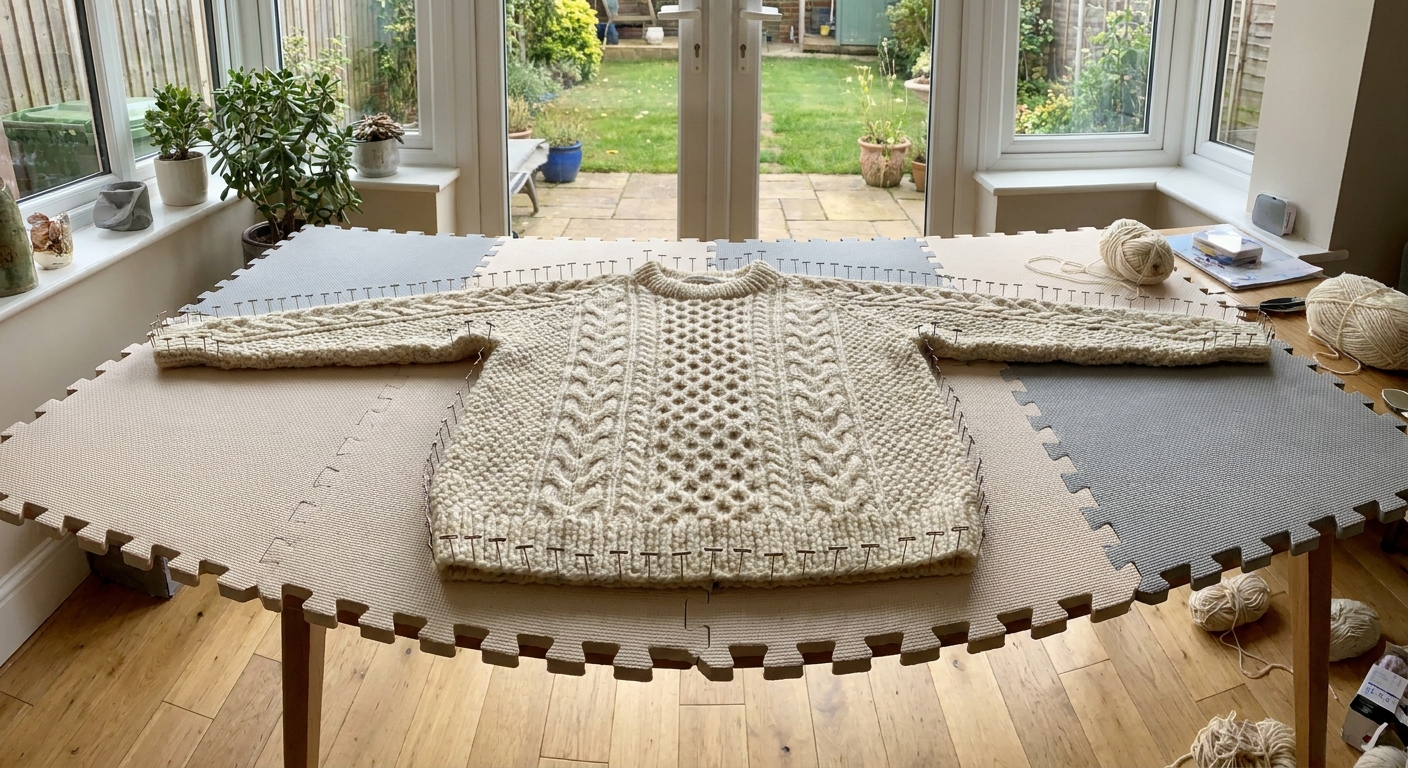
- Blocking surface such as foam mats, a spare bed, or a carpeted area covered with towels
- Rustproof pins or blocking wires if you use them
- A measuring tape or ruler
Skip: regular laundry detergent (it can be harsh on wool), hot water, fabric softener, and any vigorous swishing. Also avoid detergents with enzymes or bleach, and lean toward a pH-neutral wool wash when you can. Agitation plus heat is how felting happens.
Wools that need extra caution
Most wool knits do beautifully with the gentle-soak method, but a few fibers ask for an even lighter touch.
- Singles and very lofty yarns: They can fuzz, pill, and distort more easily. Support them fully when wet.
- Alpaca-heavy blends: Gorgeous drape, but they can relax and grow. Dry flat, measure as you block, and do not hang them, even “just for a minute.”
- Mohair and halo yarns: The fuzzy surface can mat down with too much friction or heat. Keep handling minimal.
- Rustic wools: Often very sturdy, but still vulnerable to heat, agitation, and temperature swings.
Step-by-step: the gentle soak method
Step 1: Fill the basin with water first
Use cool water and fill enough that the garment can be fully submerged without being crammed. Add your wool wash after the water is in, then swirl the water once with your hand to distribute it.
Step 2: Submerge and let it drink
Lower the garment in gradually, supporting it with both hands. Press it under the surface gently until it is fully wet. Do not twist. Do not scrub. Then let it sit for 15 to 30 minutes.
This soak time does most of the cleaning work. Wool likes time. Your hands do not need to do much.
Step 3: Rinse only if your wash requires it
Many wool washes are no-rinse. If yours needs rinsing, drain the basin and refill with water in the same temperature range. Support the garment as you move it. Temperature shock can encourage felting and can also distort the fabric or cause temporary rippling.
Step 4: Press out water, never wring
Lift the garment like a hammock, using both forearms. Let water drain for a few seconds, then set it on a towel laid flat. Try not to let it sit bunched up in a heap, since deep folds can set into damp wool. Fold the towel over and press with flat hands or step on it carefully. If the towel gets saturated, repeat with a dry towel.
Optional: For sturdy superwash garments, a washer spin-only cycle can remove water fast. Put the knit in a mesh bag, use the lowest spin you can, and skip the wash cycle entirely. If you are at all unsure, stick with towels.
How to block wool so it keeps its shape
Blocking is simply shaping while damp so your stitches relax into an even fabric. Wool responds beautifully to this. Your goal is not to stretch it into a new garment. Your goal is to guide it back into its intended measurements.
Measure first
If you have the pattern schematic, use it. If you do not, measure the garment dry before washing next time and jot the numbers down. I keep notes like this on a simple project card. If you want a tidy way to record yarn, needles, and finished measurements, my article on making a project card before starting works just as well for knitting.
Lay it flat and smooth, then pin only what needs pinning
Spread the damp garment on your blocking surface. Smooth from the center outward with open palms. Treat it like pie dough. Gentle pressure, no pulling.
- Sweaters: Square up shoulders, align side seams, and make sure the neck sits evenly. Pin the hem corners and sleeve cuffs if they curl.
- Shawls: Pin points and edges to open up lace or define a crescent. Blocking wires can help with a straight edge, but pins work fine.
- Hats: Often do not need pinning. Pat into shape and let dry over a towel. For berets or slouch hats, you can dry over an upside-down bowl covered with a towel.
Use the lightest pinning that gives you the shape
More pins are not always better. Too many pins can create a scalloped edge unless you are aiming for that look on lace. Aim for smooth lines and true measurements.
Let it dry completely
Wool can feel dry on the surface while still damp inside. Give it time, usually 24 to 48 hours depending on thickness and humidity. If you can, increase airflow with a fan across the room, not blasting directly on the garment.
Steam blocking vs wet blocking
Wet blocking
Best for: sweaters, garments that need a full reset, and anything that was washed.
Why I love it: it evens stitches, relaxes ribbing, and helps a piece settle into its intended drape.
Steam blocking
Best for: quick touch-ups, seams that need persuasion, or blends that benefit from a light steam without soaking.
How to do it safely: Hover the iron or steamer just above the fabric. Do not press down. Let the steam penetrate, then pat into shape and allow it to cool flat.
Important: Direct heat and pressure can permanently flatten acrylic (people call it “killing” acrylic), and it can also mat down halo fibers or make lofty wool look limp. If your garment includes alpaca or a lofty halo yarn, be extra cautious with steam. I talk more about alpaca behavior and drape in alpaca yarn for knitters: warmth, drape, and best projects.
Common wool care problems
My sweater grew after washing
This is usually gravity plus water weight. It happens most often when a garment is picked up by one area or hung to dry.
- Re-soak briefly in cool water.
- Press out water with towels.
- Block to the correct measurements, supporting the fabric evenly.
If it is superwash wool, it may relax more over time. Always dry flat, and store folded.
My stitches look uneven after drying
Unevenness often evens out with a proper wet block. Re-dampen (a light soak or even a careful spray) and smooth the fabric on the blocking surface. Wool stitches love to settle when you give them moisture and time.
If you want to build confidence with how fabric changes when washed and blocked, practicing on swatches is incredibly useful. My guide to knitting and blocking a gauge swatch walks through the same principles on a smaller, less stressful scale.
I accidentally felted it
Felting happens when heat, agitation, and shifting temperatures team up. If it is mild, you might regain a little flexibility by soaking in cool water with wool wash and gently reshaping. If it is heavily felted, consider it transformed fabric. Sometimes a felted sweater becomes a remarkably warm outer layer, just smaller and denser than planned.
There is pilling
Pilling is normal friction, especially at underarms and sides. Use a sweater comb or fabric shaver gently. Do not pull pills off by hand. That can break fibers and create more fuzz.
How often should you wash wool knits?
Less than you think. Wool is naturally odor resistant. For sweaters worn over a layer, I often wash once or twice a season. For next-to-skin items like hats, cowls, and mitts, more frequently makes sense.
- After each wear: air it out flat for a few hours
- Between washes: spot clean small marks with cool water and a tiny bit of wool wash
- Full wash: when it looks limp, smells less fresh, or has obvious soil
Drying and storage tips
Always dry flat
Hanging stretches wool, especially when it is damp. Even after it is dry, hangers can create shoulder bumps. Fold garments instead.
Fold with support
For heavy sweaters, I fold them with tissue paper or a soft cotton scarf inside the fold to reduce creasing. This is optional, but it keeps a crisp-looking fold line from forming.
Protect from moths without perfuming the wool
Moths prefer soiled wool, but they can still damage clean wool. Washing before long-term storage reduces risk, and so does storing knits in a sealed bin. Add clean cedar blocks or lavender sachets if you like, but do not let strong oils touch the fabric directly.
Give your knits a seasonal checkup
Once or twice a year, I unfold everything, shake it out, and refold in a different orientation. This prevents permanent creases and lets you catch any little issues early.
Quick reference: my wash and block routine
- Fill basin with cool water, add wool wash.
- Submerge garment and soak 15 to 30 minutes.
- Rinse only if needed, matching water temperature.
- Lift fully supported, press water out in towels.
- Lay flat, smooth to measurements, pin edges if needed.
- Dry completely, usually 24 to 48 hours.
- Store folded, clean, and away from friction and pests.
FAQ
Can I use the washing machine for superwash wool?
Some superwash yarns allow machine washing, but garments still benefit from gentler handling. If you choose the machine, use cold water, a delicate cycle, and place the garment in a mesh bag. Dry flat. For anything you truly want to last decades, I still prefer hand-washing.
Should I ever hang wool garments to dry faster?
No, not if you care about shape. Airflow helps more than hanging. Use a fan in the room, flip the garment halfway through drying, or move it onto a dry towel.
Do I need blocking mats?
They are convenient, but not required. A bed with towels works beautifully for sweaters and shawls. The key is a flat surface you can leave undisturbed until fully dry.