
Best Cast-On Methods for Stretchy Socks and Ribbed Cuffs

The cast-on edge is one of those tiny details that decides whether a sock feels like a dream or like a rubber band. I learned this the hard way: I once finished a beautiful pair of vanilla socks in springy sock yarn, only to discover the cuffs pinched enough to leave little ridges on my ankles. The culprit was not my ribbing. It was my cast-on.
Sock yarns love to bounce back, and ribbing loves to pull in, so your cast-on has to stretch comfortably without getting sloppy. Below are the cast-ons I reach for most often, how I choose between them, and the small adjustments that keep a stretchy edge looking tidy.
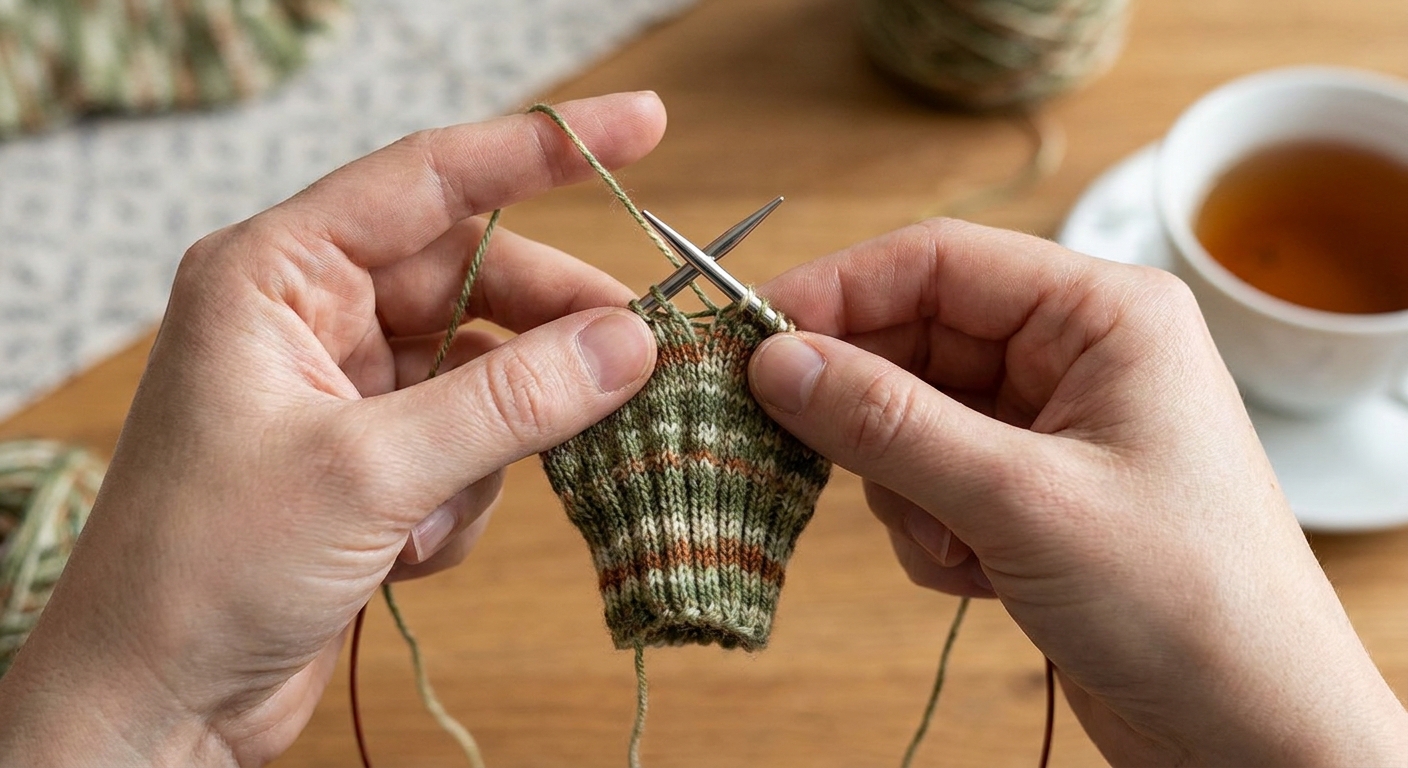
What a sock cuff cast-on needs
Before we get into methods, it helps to name the goal. For most top-down socks (and any ribbed cuff that needs to slide over heel and ankle), your cast-on should be:
- Elastic enough to comfortably stretch over the widest point (often the heel for top-down socks).
- Stable so it does not flare, ripple, or ruffle.
- Compatible with ribbing, especially 1x1 or 2x2, so the first round does not look bumpy or overly tight.
- Predictable so you can repeat it sock after sock without surprises.
If you are brand new to knitting terminology, my main navigation point for knitting resources is Guide to Knitting.
My top picks
1) Long-tail cast-on (with a small tweak)
Best for: 2x2 rib cuffs when you want a clean, classic edge and moderate stretch.
Why it works: Long-tail is tidy and fast. In sock yarn, it can be stretchy enough if you cast on over a slightly larger needle or deliberately leave a touch more slack.
How to make it sock-friendly:
- Cast on over two needles held together (or one needle that is 1 to 2 sizes larger). Then slip the extra needle out before you start ribbing.
- Do not cinch each stitch. Let the new stitch sit on the needle naturally, then move on.
- Work the first round gently. That first rib round can tighten the edge if you tug the yarn after each stitch.
What to watch for: If your sock cuff still feels tight over the heel, long-tail may not be elastic enough for you, especially if you knit tightly or prefer snug ribbing.
2) German Twisted cast-on (aka Old Norwegian)
Best for: High-stretch sock yarns, tight knitters, and cuffs that must stretch a lot without looking messy.
Why it works: German Twisted (also commonly called Old Norwegian) is essentially a long-tail variation with an extra twist that adds elasticity and a cushy edge. It is one of my most reliable sock cast-ons because it stretches generously but still looks structured.
Quick how-to (in words): Set up like long-tail with the tail over your thumb and working yarn over your index finger. For each stitch, you scoop an extra loop from the thumb strand (that is the “twist”), then complete the stitch similarly to long-tail.
Lucy tip: If your edge looks a bit ropey, you may be pulling the tail too firmly. Try casting on with relaxed hands and then gently smoothing the stitches along the needle to even out the slack.
3) Tubular cast-on
Best for: A polished, store-bought look on 1x1 ribbing, especially if you love a cuff that blends seamlessly into the rib.
Why it works: Tubular cast-on creates a stretchy, rounded edge that looks like the ribbing has no starting line. It is elastic, but more importantly, it visually matches ribbing better than almost anything else.
Two important notes:
- It takes setup rows (often some form of provisional cast-on and a few rounds of knitting and slipping). This is not the fastest method, but it is very worth it for special socks.
- It pairs best with 1x1 rib. You can adapt it for 2x2, but it is more complex.
What to watch for: If your cuff flares, your setup may be too loose or you may need to move down a needle size for the setup rounds, then return to your cuff needle for the ribbing.
4) Alternating cable cast-on
Best for: A firm, professional edge that holds its shape, great for socks that tend to sag at the cuff.
Why it works: Cable cast-on is stable. The alternating cable version usually has a bit more give than standard cable cast-on, while keeping a clean edge that resists distortion.
What to watch for: Elasticity varies a lot knitter to knitter. If you need maximum stretch to get over the heel comfortably, choose German Twisted or tubular instead.
How to choose
When I am deciding quickly, I ask myself three questions:
- Is this a tight cuff or a relaxed cuff? Tight cuff: choose German Twisted (Old Norwegian) or tubular. Relaxed cuff: long-tail (with two needles) is often enough.
- Is the ribbing 1x1 or 2x2? 1x1: tubular is gorgeous, and German Twisted is a practical favorite. 2x2: German Twisted or long-tail with a needle-size tweak.
- Do I care more about speed or finish? Speed: German Twisted. Finish: tubular.
One quick note for toe-up socks: cast-on matters less because you begin at the toe. For toe-up comfort, I put my energy into a stretchy bind-off at the cuff (and a cuff that recovers well), then I test the cuff the same way I would test a cast-on edge.
If you are also juggling yarn stretch and gauge across projects, the same mindset applies in crochet when you size up or down for amigurumi. The principle of adjusting structure to match the material is universal. If you enjoy that kind of tinkering, you might like Resize Amigurumi by Changing Yarn Weight.
Keep elastic cast-ons tidy
A very elastic cast-on is wonderful, until it ripples. Here are the fixes I use most:
Match needle size to the job
- If your cast-on is wavy or flared, try casting on with your actual cuff needle instead of sizing up.
- If your cast-on is tight and stingy, cast on over a larger needle or choose German Twisted instead of forcing long-tail to behave.
Stabilize if your edge looks unsettled
Some patterns go straight into ribbing, and that can be exactly right. If my edge looks unsettled, I work one round of plain knit (or a round that is not pulling in as much), then begin ribbing. This can help the cast-on seat itself evenly.
Do not tug after every stitch
Ribbing encourages tightening because we are constantly switching between knit and purl. Try letting your yarn tension stay consistent and only adjust if you see an actual loop forming.
Block lightly before judging
Sock yarn, especially wool and wool blends, relaxes after a wash. If you are on the fence, put your stitches on waste yarn, wash the cuff gently, and let it dry. A lot of “problems” disappear once the yarn blooms.
Mini check
Before you knit the whole leg, do this quick test:
- Cast on and work 1 to 1.5 inches of ribbing.
- Slide the tube onto both hands and gently stretch it to the approximate width it will need to pass over your heel.
- If the cast-on edge feels like the limiting factor, stop and switch methods now. It is a five-minute fix today and a lifelong comfort upgrade later.
If you like having a plan before you start a project, I use the same habit across crochet and knitting. My process is described in Make a Project Card Before Starting Crochet, and it adapts beautifully to sock knitting notes like needle size, cast-on used, and how it felt on the ankle.
Common problems
My cuff edge is tight, but the ribbing stretches fine
- Switch to German Twisted (Old Norwegian).
- Or cast on over a larger needle, then knit the first round on your cuff needle.
My cast-on flares out
- Cast on with the same needle size you will use for the cuff.
- Try alternating cable for more structure.
- Make sure you are not accidentally adding extra slack between stitches during cast-on.
The first ribbing round looks messy
- Slow down for that first round and keep your tension calm.
- Consider tubular cast-on for 1x1 rib if you want the smoothest transition.
- If you are using magic loop, avoid pulling too tightly at the cable join, since that can distort the first few stitches.
My cast-on is elastic, but it looks uneven
- After casting on, gently stretch the line of stitches along the needle to distribute slack evenly.
- Work one steady, even round before you decide it is wrong. Many cast-ons settle after that first round.
My default
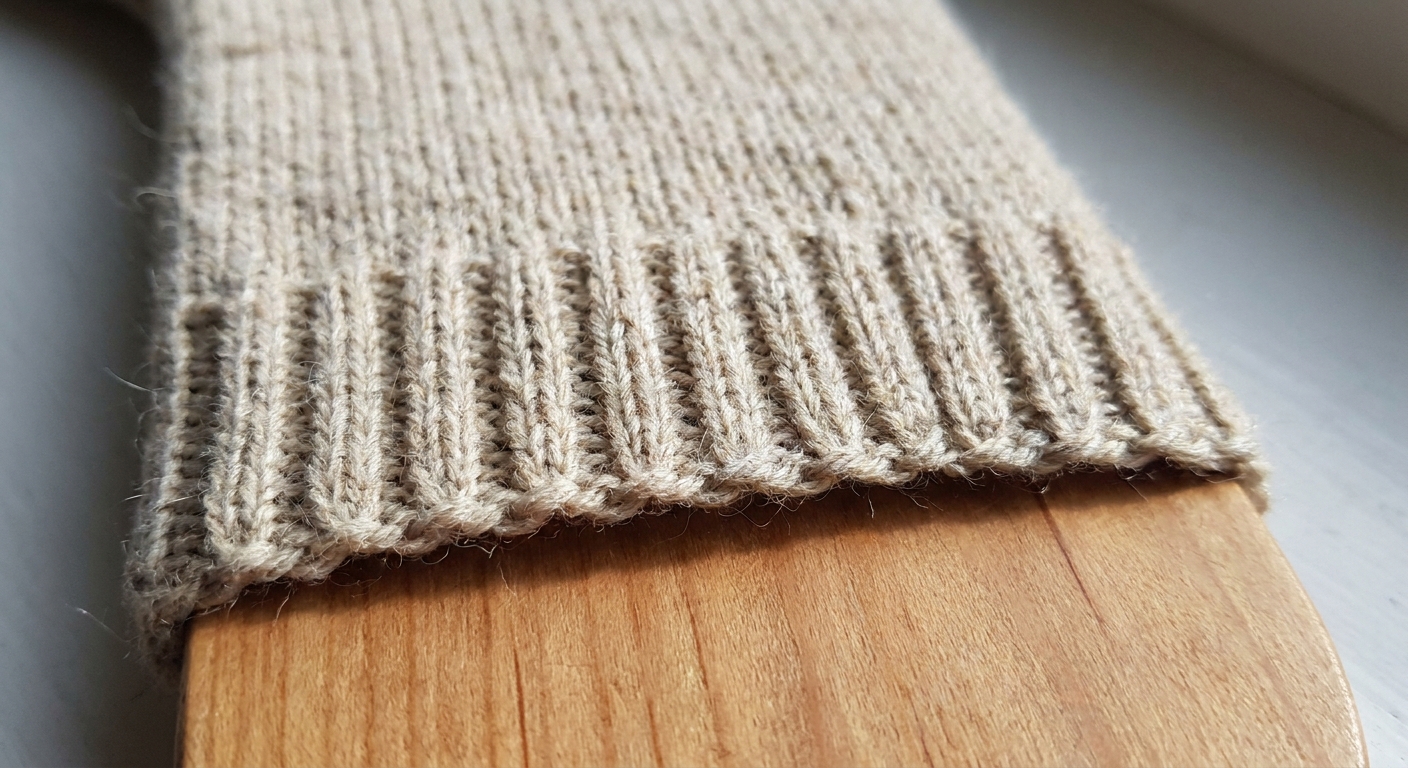
If you just want a solid recommendation you can stick with while you build confidence: I would choose German Twisted (Old Norwegian) for most top-down socks in typical stretchy sock yarn. It gives me the comfort I want without sacrificing a tidy edge, and it behaves nicely with both 1x1 and 2x2 ribbing.
Then, once you have a few pairs under your belt, treat yourself to tubular cast-on for that one pair you want to feel extra polished.
FAQ
Is a stretchy cast-on always best for socks?
For top-down socks with ribbed cuffs, usually yes. The cuff has to stretch over the heel and then recover to stay up. The exception is a very loose-fitting sock or a cuff design meant to be firm, where alternating cable can be a better match.
Should I cast on with a larger needle for socks?
Sometimes. If you are using long-tail and you know you knit tightly, casting on over a larger needle (or two needles held together) can fix tightness fast. If you are using German Twisted, I often do not need to size up.
What cast-on looks best with 1x1 ribbing?
Tubular cast-on is the most seamless-looking option for 1x1 rib. If you want a simpler method with excellent stretch, German Twisted (Old Norwegian) is a close second in wearability.