
Wood, Metal, or Bamboo Needles: Match Material to Yarn Grip

I used to think “a needle is a needle” until I knit my first truly slick blend on shiny metal needles and watched half my stitches try to take a little vacation off the tips. Then I switched to wood, and suddenly I could breathe again.
Needle material is not just about aesthetics. It changes how much your yarn grips, how quickly stitches slide, how steady your tension feels, and how relaxed your hands stay over a long session. If your knitting rhythm feels either too skittery or too sticky, you often do not need a new technique. You need a better match.
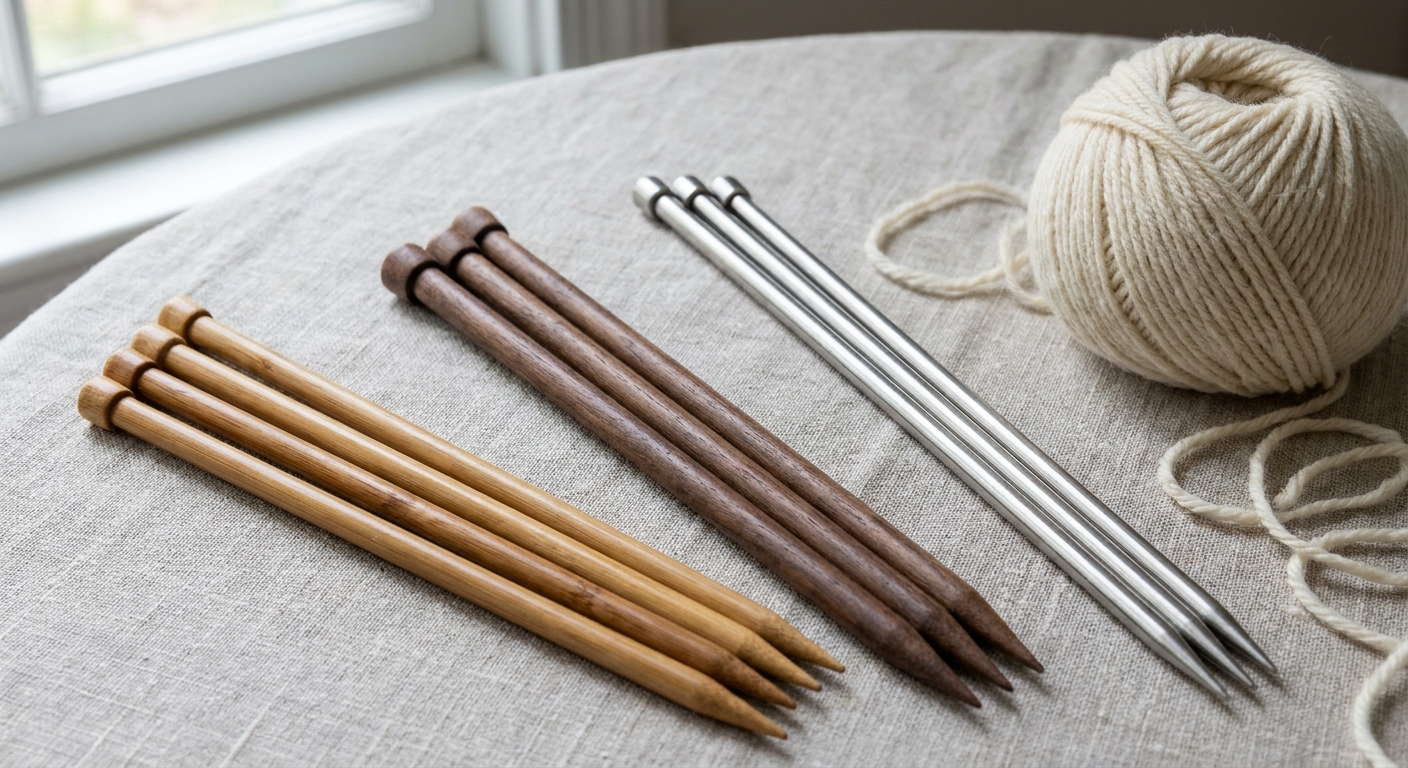
The quick idea: match friction
Think of it as a friction dial. These are common tendencies, not unbreakable rules (finishes and brands matter a lot):
- Metal often gives the least friction, so stitches glide fast.
- Wood often sits in the middle, with a steady, controlled slide.
- Bamboo often has the most grip, so stitches stay put.
Yarn also has a “grip personality.” Some yarns are glassy and springy. Others are fuzzy, toothy, or grabby. Your goal is a comfortable middle where the yarn moves when you ask it to, but not when you do not.
Wood needles: my steady all-around pick
Wood needles are the sweet spot for a lot of knitters because they add just enough traction to prevent stitch chaos without feeling slow. When I am teaching a friend to knit, wood is often the first material I hand over because it helps the hands learn consistent tension.
Wood pairs well with:
- Slick yarns like superwash wool, many merino singles, silk blends, and smooth acrylics
- Plant fibers that can feel slidey, like mercerized cotton and some bamboo or viscose blends
- Fine-gauge work where you want control more than speed, such as socks or lace charts
Wood can feel frustrating with:
- Very grabby yarns (rustic wool, mohair-heavy blends) where friction stacks up and your hands start working harder than they should
- High-speed knitting moods when you want stitches to fly
Lucy tip: If your stitches feel too tight on wood, do not assume you knit “wrong.” Try the same yarn on metal and see if your hands relax instantly. That is information, not a failure.
Metal needles: fast glide and crisp stitches
Metal needles are my “zoom” setting. They can make stockinette feel effortless and can help you avoid over-gripping the yarn because the stitches do not need to be shoved along.
Metal pairs well with:
- Grabbier or higher-friction yarns like many non-superwash wools and rustic blends
- Halo yarns (mohair, suri alpaca blends) where extra needle grip can turn every row into a tug-of-war
- Textured stitches when you like speed and want the needle to move cleanly through loops, such as cables and dense ribbing
Metal can feel frustrating with:
- Very slick yarns (silk, some superwash, ribbon yarns) because stitches can slip off the tip if you pause
- Beginners who are still learning how to control stitch placement and tip awareness
A quick note on alpaca: it can be surprisingly slick and drapey when it is smooth, but it can also feel grabby when it is hairy or blended for halo. If your alpaca yarn feels clingy, metal often helps. If it feels like it wants to slide away, wood is usually calmer.
If you love metal but your yarn is misbehaving, look at two things: tip sharpness (sharper tips can split certain yarns) and your needle finish (some metals are ultra-polished and extra slippery).
If yarn splitting is making you dread your project, my troubleshooting guide can help: Stop Yarn Splitting While Knitting.
Bamboo needles: maximum control
Bamboo needles are the “training wheels” people talk about, but I mean that in the most respectful way. Bamboo offers confident grip. If your stitches keep escaping or you are knitting in a moving car, bamboo can be wonderfully calming.
Bamboo pairs well with:
- Slick, smooth yarns (silk blends, superwash, many acrylics)
- Beginners who need stitches to stay where they belong
- Colorwork floats when you want steadiness and fewer accidental drops
Bamboo can feel frustrating with:
- Fuzzy yarns like mohair or brushed alpaca because the combo can become too grippy
- Very tight knitters who already struggle to move stitches along the needle
A practical note: Bamboo can vary a lot by brand. Some bamboo is satin-smooth, some feels more matte and grabby. If you tried bamboo once and hated it, it may have been the specific finish, not the material itself.
A simple pairing cheat sheet
If you want the quickest decision, start here:
- Yarn is sliding off the needle: switch to wood or bamboo.
- Yarn is squeaking or dragging: switch to metal.
- Your hands are tense and stitches feel hard to move: try metal (less friction) or a smoother wood.
- Your gauge is loose: wood or bamboo can help you add control. If you are seeing ladders at joins (DPNs or magic loop), also check your join and purl tension, since ladders are often more about technique than needle surface.
How material affects gauge and tension
Needle material does not change the size of the needle, but it can change your behavior, which changes gauge.
- On grippy needles (often bamboo), many knitters unconsciously pull yarn tighter to make stitches slide. Gauge can tighten.
- On slick needles (often metal), stitches move easily and some knitters relax their hands. Gauge can loosen.
That is why I always recommend a quick swatch when you change needle material, even if the needle size stays the same. If you want a calm, step-by-step refresher, I keep one here: How to Knit and Block a Gauge Swatch.
Tip shape matters too
Material is only half of the “feel.” The other half is tip shape.
- Blunt tips can be kinder to splitty yarns, but may feel fiddly for tight decreases.
- Sharp tips can make lace and complex maneuvers easier, but can split loosely spun yarns more easily.
A yarn can be both slick and splitty (hello, some smooth multi-ply cottons). In that case, I usually choose wood or bamboo for grip, then look for moderately pointy tips rather than ultra-sharp.
Comfort: warmth and noise
Two real-world details that matter more than people expect:
- Temperature: metal can feel cold in the hands at first, while wood and bamboo tend to feel warmer and less shocking in winter knitting.
- Sound: metal is usually clickier. Wood and bamboo are typically quieter, which is nice for couch knitting or late-night rows.
If your hands get fatigued, sometimes it is not just friction. It is the whole sensory experience.
My go-to fixes when it feels “off”
If your stitches keep falling off
- Switch from metal to wood or bamboo.
- Try a slightly blunter tip style if you are working very slick yarn.
- Use needle tip protectors when you set your project down, especially in the early rows.
If your knitting feels slow and draggy
- Switch from bamboo to wood or metal.
- Check if your yarn has a halo or high-friction texture. Metal often helps.
- Loosen your grip intentionally for one row and see if your shoulders drop.
If your yarn keeps splitting
- Try a less sharp tip, regardless of material.
- Slow down at decreases and when working into tight stitches.
- Consider whether the yarn is loosely spun or prone to separating.
What I choose for popular yarn types
- Superwash merino: wood first, bamboo if it is very slick, metal if I want speed and I trust my tension.
- Rustic wool (non-superwash): metal for smoothness, wood if I want a little more control.
- Mohair or fluffy halo blends: metal almost always, to reduce snagging and dragging.
- Mercerized cotton: wood or bamboo for grip, especially for lacey tops or summer knits.
- Standard acrylic: wood is a comfy middle ground; bamboo if you are new; metal if you want it to move faster.
If you are still building your knitting toolkit, I also have a yarn-focused beginner roundup here: 7 Best Yarns for Beginner Knitters.
FAQ
Is bamboo always grippier than wood?
Often, yes, but finishes vary. Some polished bamboo needles feel surprisingly slick, and some matte wood needles feel quite grabby. Treat the “grip scale” as a general rule, not a law.
Do I need different needle materials, or can I just learn on one?
You can absolutely learn on one. If you only buy one material to start, I would choose wood because it works with the widest range of yarns. Over time, adding one metal pair and one bamboo pair gives you easy troubleshooting options.
Why does my gauge change when I switch from wood to metal?
Because your hands respond to friction. With less resistance, many knitters relax, and the loops can become slightly larger. A small swatch tells you what your personal hands do on that surface.
What if my yarn is both slick and fuzzy?
That is when I start with wood. Wood usually gives enough control for slip without grabbing the fuzz as aggressively as some bamboo needles can. If it still feels sticky, I move to metal and slow my stitch handling a touch.
One gentle rule to remember
If knitting feels like you are constantly correcting the yarn, you are fighting friction. Swap needle material and see what happens. The right match makes your stitches feel obedient in the nicest way, like the yarn finally agrees to move at your pace.
If you want more knitting foundations like this, you can browse everything in my knitting guide here: Guide to Knitting.