7 Best Yarns for Beginner Knitters

When you’re learning to knit, the yarn you choose can feel like a quiet teacher. The right one shows you exactly where your needle should go, holds its shape while you practice knit and purl, and forgives you when you inevitably need to tink back, frog, or start over (all completely normal, by the way).
I learned the hard way that “pretty yarn” is not always “good learning yarn.” Slippery, splitty, or overly fuzzy fibers can make basic stitches feel mysteriously difficult. So below is my curated list of the most forgiving yarn weights and fibers for beginner knitters, plus what each one is best for and what to watch out for.
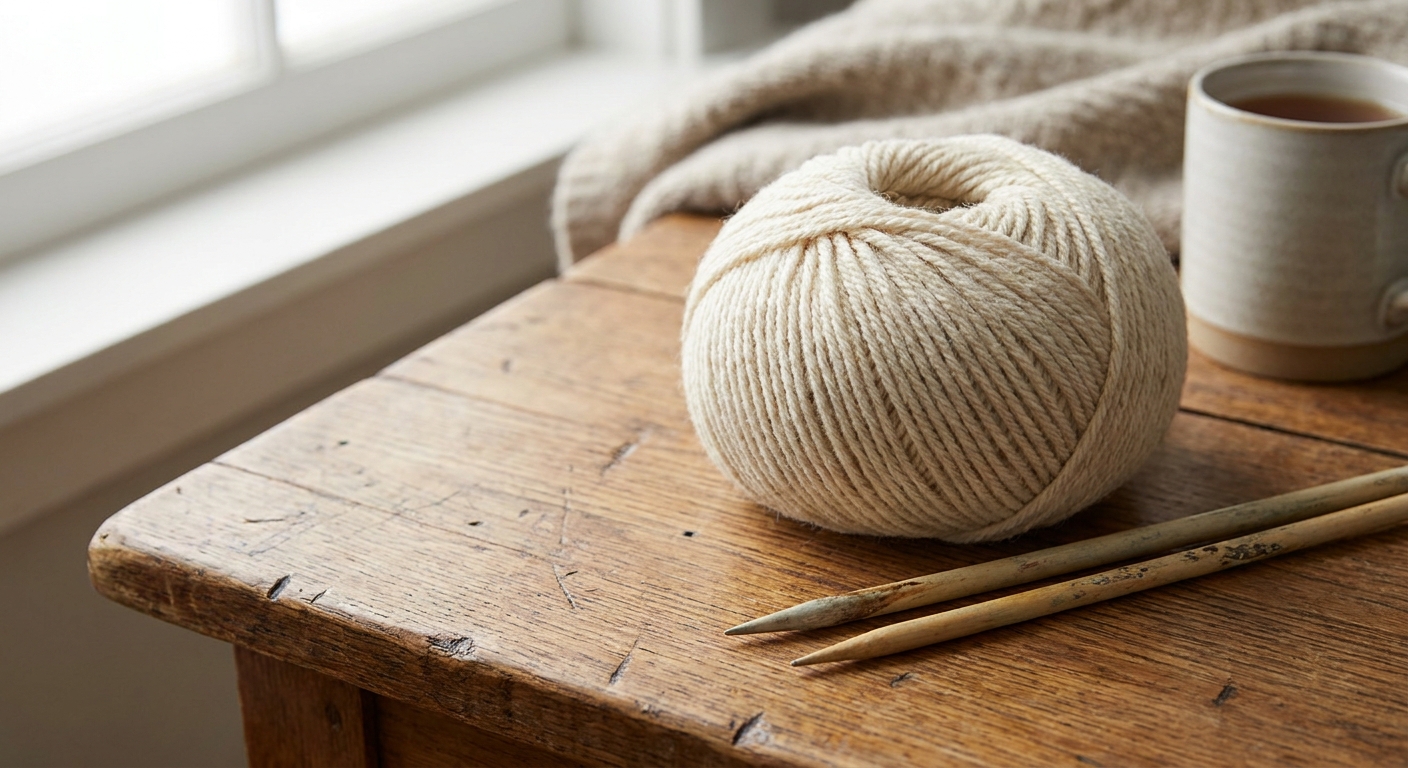
What makes yarn beginner-friendly?
Before we pick winners, here’s what I look for when I’m teaching someone to knit (or when I’m re-learning a technique myself and want zero drama):
- Light to medium solid colors so you can see each loop clearly.
- Smooth, plied construction (multiple strands twisted together) to reduce splitting.
- Some grip so stitches don’t slide off the needle, but not so grabby it’s hard to move them.
- Easy to frog without felting, fuzzing, or snapping.
- Not too thin so you aren’t chasing tiny stitches, and not too thick so you can’t read what you made.
If you also crochet, you’ll recognize this mindset from choosing yarn to learn stitch anatomy. We talk about yarn behavior a lot in our yarn crafts guide, and many of the same “visibility and forgiveness” rules apply.
The 7 best yarn weights and fibers for learning knit and purl
1) Worsted weight, smooth acrylic (Category 4)
Why it’s great: Worsted is the sweet spot for learning. The stitches are big enough to see, and acrylic is sturdy, affordable, and easy to unravel and re-knit. A smooth, tightly spun acrylic shows your knit “V” and your purl bumps like little training wheels.
Best for: First swatches, garter stitch scarves, simple dishcloth-sized practice squares, beginner hats.
Needle starting point: Check the ball band, but many worsted yarns are happiest around US 7 to 9 (4.5 to 5.5 mm) for a comfortable practice fabric.
My shopping tip: Look for a yarn labeled “worsted” or “medium (4)” that feels round and even, not airy and roving-like.
Avoid if: Your hands are very sensitive to squeaky fibers. Some acrylics can feel grabby on wooden needles and squeaky on metal.
2) Worsted weight, superwash wool (Category 4)
Why it’s great: Superwash wool has that classic wool “bounce,” so your stitches look tidy even when your tension is still finding its rhythm. It also generally stands up well to lots of handling and frogging, since it’s less prone to felting than non-superwash.
Best for: Practice swatches you want to keep, cozy cowls, beginner mitts, and anything you’ll block later.
Watch out for: Some superwash yarns can feel a bit slick or splitty depending on the spin, and superwash can relax and grow after washing. That’s not a reason to avoid it, just a reason to learn the habit of making a small gauge swatch early.
If you’re curious about how wool behaves compared to acrylic in wearable projects, you’ll like my breakdown in Wool vs Acrylic Yarn for Sweaters.
3) DK weight, smooth wool or acrylic blend (Category 3)
Why it’s great: DK is slightly thinner than worsted, which makes it wonderful once you can knit a basic fabric but still want a clear view of stitch structure. It’s especially nice for learning stockinette because the fabric drapes well and shows errors without being bulky.
Best for: Neat practice swatches, lightweight scarves, simple baby knits, and learning increases or decreases after you’ve got knit and purl down.
Needle starting point: Again, the ball band wins, but DK commonly pairs with something like US 5 to 7 (3.75 to 4.5 mm).
Beginner comfort tip: If your stitches feel cramped, go up a needle size for your practice swatch. You’re learning movement first, perfection later.
Quick stockinette note: If you knit flat, stockinette is typically knit one row, purl one row. If you knit in the round, it’s often all knit stitches.
4) Chunky weight, smooth plied yarn (Category 5)
Why it’s great: Chunky yarn gives you quick feedback. You can knit ten rows and actually see progress in minutes, which is so motivating when you’re learning. The key is smooth and plied, not fuzzy and not single-ply roving.
Best for: First-time scarves, simple cowls, and learning to keep an even edge because each stitch is easy to spot.
Watch out for: With chunky yarn, it’s easy to create a stiff fabric if you pull your stitches tight. Aim for relaxed hands and a needle size that lets the stitches slide.
5) Aran weight, wool blend with a firm twist (heavy Category 4)
Why it’s great: Aran is a bit thicker than many standard worsted yarns, and that extra substance can make knit and purl feel more stable on the needles. A firm twist helps prevent splitting when you’re still developing consistent needle angles.
Best for: Beginning stitch dictionaries, sampler scarves, and early texture stitches like seed stitch or ribbing.
Weight note: Labels vary by country and brand. Aran is often marketed as “aran” or “heavy worsted.” It usually sits at the thick end of Category 4 and can overlap Category 5.
Fiber note: Wool-acrylic blends can be a lovely middle ground: bounce from wool, easy care and durability from acrylic.
6) Cotton, but only in the right form (worsted cotton with multiple plies)
Why it can be great: Cotton shows stitch definition beautifully, so it’s excellent for learning to “read” knitting. But it has almost no stretch, so it can feel hard on the hands if you choose a stiff cotton or knit too tightly.
Best for: Dishcloths and washcloths, learning consistent tension, practicing neat edges.
Choose this version: A softer, plied cotton in worsted weight with a firmer twist. (Skip cotton that feels stringy, loosely twisted, or harsh when you’re brand new, because it can split and it’s less forgiving on your hands.)
If you’re bouncing between crafts, cotton is also a staple for crochet practice. I use it a lot in pieces like my Textured Cotton Waffle Stitch Dishcloth and the principles carry over nicely.
7) T-shirt yarn (for pure stitch practice, not precision)
Why it’s great: T-shirt yarn is thick, stable, and can be very beginner-friendly because the loops are large and easy to grab. If it’s made from smooth, continuous jersey strips, it also tends to resist splitting.
Best for: Short practice sessions, learning to tension yarn with your hands, and seeing stitch anatomy without squinting.
Watch out for: Quality varies. Some T-shirt yarn has joins, seams, or uneven thickness depending on how it’s made. And because it’s so thick, it’s not ideal for learning subtle tension control. Think of it like training wheels for movement, then graduate to worsted or DK for “real fabric.”
Yarns I’d skip at the very beginning (even if they’re gorgeous)
- Eyelash, bouclé, mohair, or very fuzzy yarns: you can’t see your stitches clearly, and frogging can be a heartbreak.
- Single-ply roving yarns: they pill, they split, and repeated practice can make them look worn fast.
- Slippery rayon, bamboo-silk blends, or very slick mercerized cotton: stitches can slide off the needle when you’re still building confidence.
- Very dark colors: black and deep navy hide stitch structure under most indoor lighting.
These yarns can be wonderful later. They just tend to teach the wrong lesson first, which is “knitting is hard,” when really it was the yarn being unhelpful.
My “first yarn” cheat sheet
If you want the fastest path to confidence, here’s what I’d pick for a first trip to the yarn aisle:
- Weight: Worsted (Category 4)
- Fiber: Smooth acrylic or superwash wool
- Color: Light solid or heather (cream, oatmeal, pale gray, soft sage)
- Texture: Plied, not fuzzy, not novelty
Then knit two swatches: one in garter stitch (all knit) and one in stockinette (flat: knit one row, purl one row). When you can recognize the “V” of a knit stitch and the bump of a purl stitch without thinking too hard, you’re ready to branch out.
For more beginner knitting support, I keep an updated hub of lessons and approachable projects in Guide to Knitting.
FAQ
Is bulky yarn always best for beginners?
Not always. Bulky can be very encouraging because it works up fast, but it also magnifies tight tension and can feel stiff. If you want one do-it-all learning yarn, worsted is usually the most comfortable and consistent.
What needle material pairs best with beginner yarn?
If you’re using a smooth acrylic or superwash wool, bamboo or wood needles add a little grip and help keep stitches from sliding away. If your yarn feels sticky, metal needles can help it glide. There’s no moral victory in struggling with a pairing that fights you.
Can I learn on cotton?
Yes, especially if your goal is dishcloths. Just pick a softer, plied cotton and keep your tension relaxed. If your hands start to ache, switch to a bouncier fiber like wool or a wool blend for your practice sessions.