
Crocheting With Glow-in-the-Dark Yarn for Halloween Amigurumi

The first time I tried glow-in-the-dark yarn, I thought I was being so clever. A little ghost for the mantle, a spooky surprise when the lights go out. Instead, I got squeaky stitches, a slightly splitty strand, and a ghost that glowed beautifully while quietly advertising every single tension wobble I had made.
The good news is that glow yarn is not “hard,” it is just different. Once you treat it like the specialty fiber it is, it becomes one of the most satisfying Halloween materials to work with. Let’s get you to the fun part: bright little ghosts, eerie eyes, and decor that looks adorable in daylight and downright magical at night.
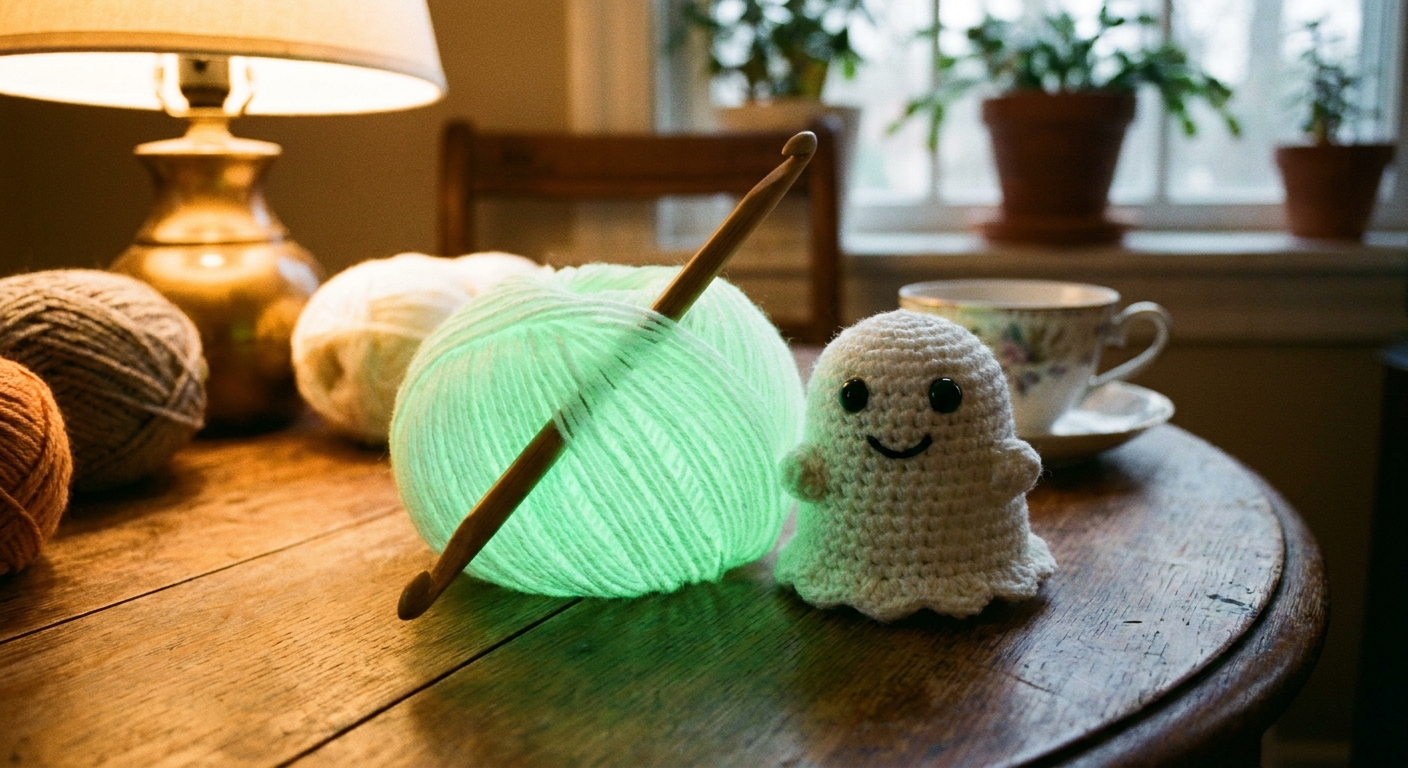
What glow yarn feels like
Many glow-in-the-dark yarns are acrylic or acrylic blends with phosphorescent pigment mixed into the fiber. Others use a glow filament plied with a standard yarn. Either way, the glow component can make the strand feel a bit:
- Stiffer than your usual acrylic
- Squeakier on certain hook materials
- Less elastic, so tight tension feels even tighter
- Slightly splitty, especially on sharp hook tips
None of that means it is “bad yarn.” It simply means your usual amigurumi habits might need a tiny tweak.
Hooks that help
Best hook materials
If your yarn feels like it is dragging or squeaking, the hook material matters more than usual.
- Inline aluminum hooks: My most reliable option for glow yarn. Smooth glide, predictable loops.
- Plastic or resin hooks: Often quieter, but can add drag if the surface is not super smooth.
- Bamboo or wood hooks: Great for slippery yarn, but glow yarn is rarely slippery. Wood can feel too grabby unless your tension is naturally loose.
Choose a shape that avoids splitting
Glow yarn can split if the hook tip is very pointy. If you notice frequent splitting, try:
- A hook with a slightly rounder head
- A hook style you already know well (if you are already adjusting to a new yarn, it can help to keep the tool familiar)
Hook size for amigurumi
Amigurumi usually calls for a smaller hook than the label recommends so stuffing does not peek through. With glow yarn, I still size down, just not as aggressively.
- If the yarn label suggests 5.0 mm, try 3.5 to 4.0 mm for amigurumi when you are working with a typical medium (4) or worsted-weight glow yarn.
- If you are a tight crocheter, start at the larger end of that range to keep your hands happier.
If you are unsure, make a quick swatch in single crochet and stuff it. Your goal is dense fabric without turning the project into a wrestling match.
Tension tips
Think “firm,” not “tight”
Glow yarn shows stitch definition clearly, which is wonderful, but it also highlights uneven tension. Aim for a firm, consistent pull rather than yanking each stitch snug.
- Relax your yarn hand one notch compared to your normal amigurumi tension.
- Let the hook do the work. If you are forcing loops over the hook head, you are too tight.
Keep loop height consistent
One sneaky cause of wobble is changing loop height mid-round. Try to keep your working loop the same size each stitch. If you tend to “choke up” when concentrating, pause and reset your grip.
Invisible decreases can feel stubborn
Invisible decreases are gorgeous for amigurumi, but with stiffer yarn they can feel stubborn. If you struggle, you have options:
- Keep invisible decreases, but go up 0.25 to 0.5 mm in hook size.
- Switch to a standard sc2tog decrease for the project. It is slightly more visible, but often easier and still very cute on spooky decor.
Handling and comfort
Reduce squeak and drag
That squeaky feel usually comes from surface friction between the yarn and hook. These small changes often help:
- Try a different hook material first (smooth aluminum is my go-to).
- Crochet with shorter motions and fewer big pulls.
- Work in good light so you are not over-tensing to “feel” your stitches.
Take more breaks than usual
Glow yarn can be less forgiving on wrists and fingers, especially with tiny amigurumi rounds. I like a simple rhythm: finish a round, stretch hands, then continue. It keeps the project fun instead of fussy.
Wind the skein if it fights you
Some glow yarns come in looser put-ups that snag. If you feel sudden tension spikes while pulling yarn, wind it into a cake (if you have a winder) or a ball. Even a quick rewind can smooth out your stitch consistency.
Designing pieces that glow
Choose shapes that work in daylight
The glow effect is a bonus, not the whole personality. My favorite glow-friendly amigurumi shapes are:
- Ghosts (simple body, lots of surface area to glow)
- Bats (glow body with dark wings is striking)
- Mini pumpkins (a glow pumpkin is unexpectedly charming)
- Skulls (glow makes the features pop)
Add contrast yarn on purpose
For the cutest spooky look, pair glow yarn with a matte, darker yarn in small areas:
- Black or deep purple for embroidered eyes and mouths
- Orange for little accessories like bows or tiny pumpkin stems
- Charcoal for stripes or accents
Keep contrast sections small if you want the glow to dominate after dark.
Stuffing and show-through
Glow yarn tends to be pale, and pale stitches make stuffing show more easily. A few easy fixes:
- Use matching stuffing if you have it (off-white often looks better than bright white).
- Stuff in tiny pinches and shape as you go to avoid bulges.
- If gaps appear, first focus on more even tension. If gaps still bother you, adjust hook size gradually until the fabric looks right.
One more safety note from experience: for decor that might be handled by kids or pets, I prefer embroidered eyes over plastic safety eyes. Small parts are still small parts, even when they look adorable.
Charging and care
How to charge the glow
Glow yarn needs light exposure to shine in the dark. For the strongest glow:
- Place your finished piece under a bright lamp for several minutes, or in sunlight briefly.
- Some crafters also use a small LED flashlight, and UV light can make many glow pigments pop faster. If you try UV, keep it brief and sensible.
- The glow will fade over time and can be recharged again and again.
Washing and storage
Many glow yarns are acrylic-based, so gentle washing is often fine, but the safest rule is still: follow the yarn label. To help the glow stay bright, avoid high heat and harsh detergents.
- Cool water, mild soap, and gentle agitation
- Lay flat to dry to keep amigurumi shapes crisp
- Store away from dust so pale yarn stays bright
If you are unsure, test wash a small swatch first, especially if the yarn feels stiff or heavily treated.
Quick glow ghost checklist
When I want a no-drama Halloween make, I run through this quick list:
- Hook: smooth aluminum, not too pointy
- Size: 3.5 to 4.0 mm for medium (4) glow yarn, then adjust if your fabric needs it
- Tension: firm and even, not strangled
- Decreases: invisible if comfortable, standard if stiff
- Eyes: embroidered is usually safer and cuter for small decor
If you like planning your projects before you begin, my simple approach is to jot yarn, hook, and finishing notes in a quick project card so you do not have to re-remember decisions mid-way. I walk through that habit here: Make a project card before starting crochet.
Common problems and fixes
“My stitches look messy, even though I know how to crochet.”
This is usually tension plus drag. Switch hook material first, then consciously loosen your yarn hand a touch. Glow yarn tends to punish tightness.
“My yarn keeps splitting.”
Try a rounder-headed hook and slow down on insertions, especially in tight decreases. Splitting often happens when the hook tip is hunting for the stitch and pierces a ply instead.
“It does not glow much.”
Charge it under stronger light for longer. Some yarns glow softly rather than neon-bright. A quick lamp charge right before display usually makes the biggest difference. If you are using sunlight, brief is better than hours, since prolonged sun can fade many craft materials over time.
“My ghost is glowing, but the shaping looks lumpy.”
Stuff in smaller amounts and spend time shaping with your fingers as you go. Lumps read more strongly on pale, glowy surfaces, so slow stuffing is worth it.
More Halloween ideas
If you are in full spooky-season mode, you might also enjoy browsing our holiday craft guides for more seasonal makes and inspiration: Holiday crafts guide. And for a refresher on amigurumi-friendly stitch habits like consistent rounds and tidy shaping, our crochet resources live here: Crochet patterns guide.